MILIND GUPTE PHOTOGRAPHY
  • HOME
  • BIRDS
  • ANIMALS
  • Flowers
  • BUTTERFLIES & INSECTS
  • Reptiles
  • Blog

Riverfire Brisbane Australia

10/6/2017

7 Comments

 
Picture
Brisbane Festival is one of Australia's leading international arts festivals, and is held each September in Brisbane, Australia
Sunsuper Riverfire is Queensland's greatest fireworks display, ending Brisbane Festival with a bang.
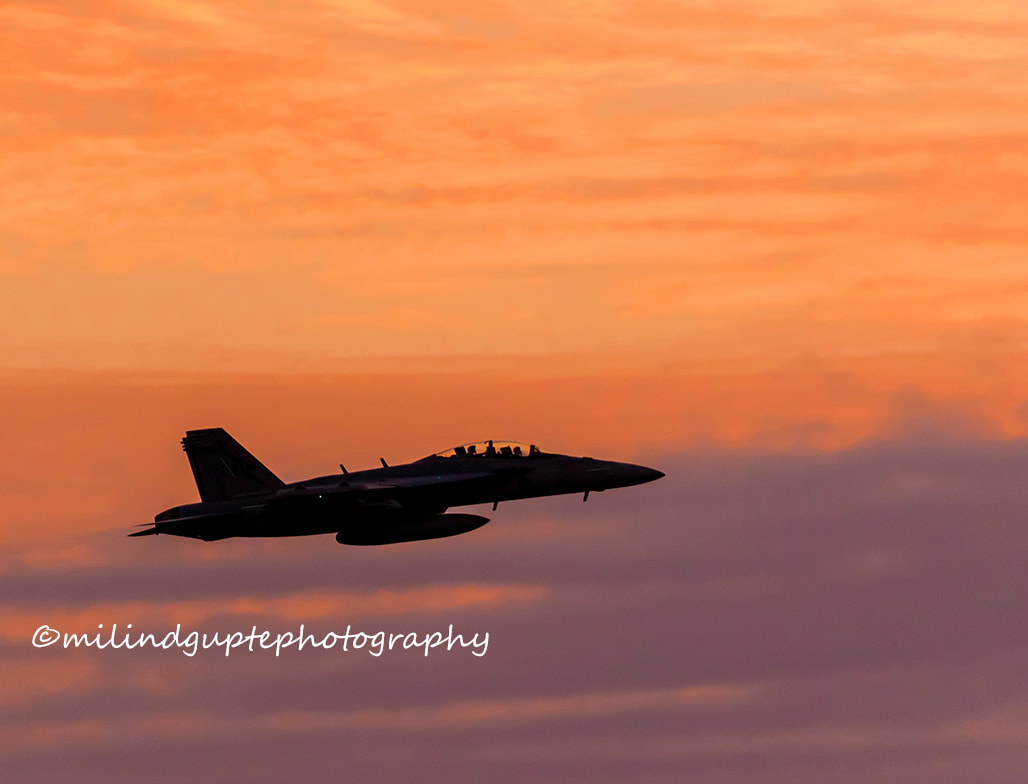
It stars in the afternoon with a Army helicopter display , followed by a flypast by the jets.
And finally the fireworks for approx 20 minutes around 7pm.
It is a spectacular display and a great chance to to photograph fireworks
7 Comments

Spring Flowers

9/28/2016

4 Comments

 
Picture
4 Comments

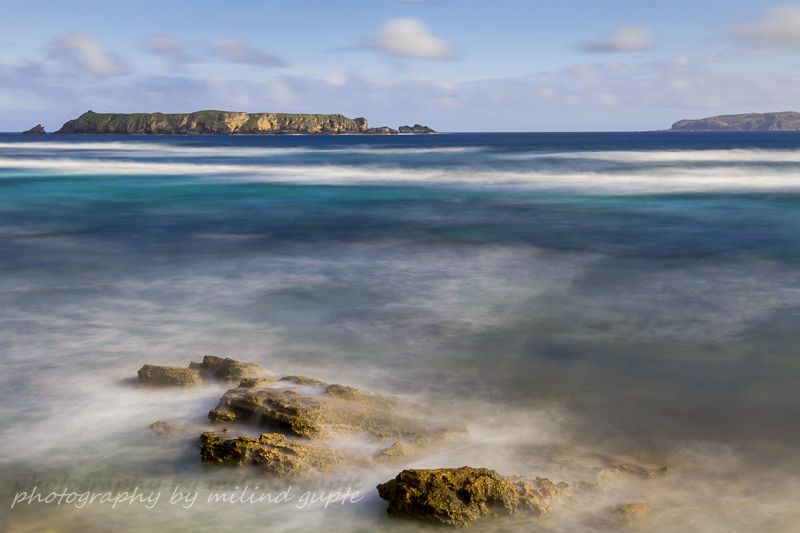
Norfolk Island Long Exposure Seascapes

3/9/2016

1 Comment

 
Picture
While we were on Norfolk Island I wanted to try my hand at Long exposure photography. After getting guidance and some tips from friends who were already into this type of photography, I ordered a Hoya 9stop ND [Neutral Density] filter. My serious and dedicated friends were using the Lee system with the Lee big stopper, but I decided to go with the Hoya screw in type as it was easy to store and handle and less stuff to carry.
Seascapes lend themselves well to Long Exposure Photography [ LEP] . This kind of photography is useful to render texture of water smooth in the photo- longer the exposure smoother / silkier the effect.
When you try seascapes with your camera and lens,the water is bright and reflects a lot of light so you get high shutter speeds even with the lowest ISO setting on your camera. When the photos are taken at these fractions of a second the water movement freezes depending on the actual shutter speed. [as in photo below]
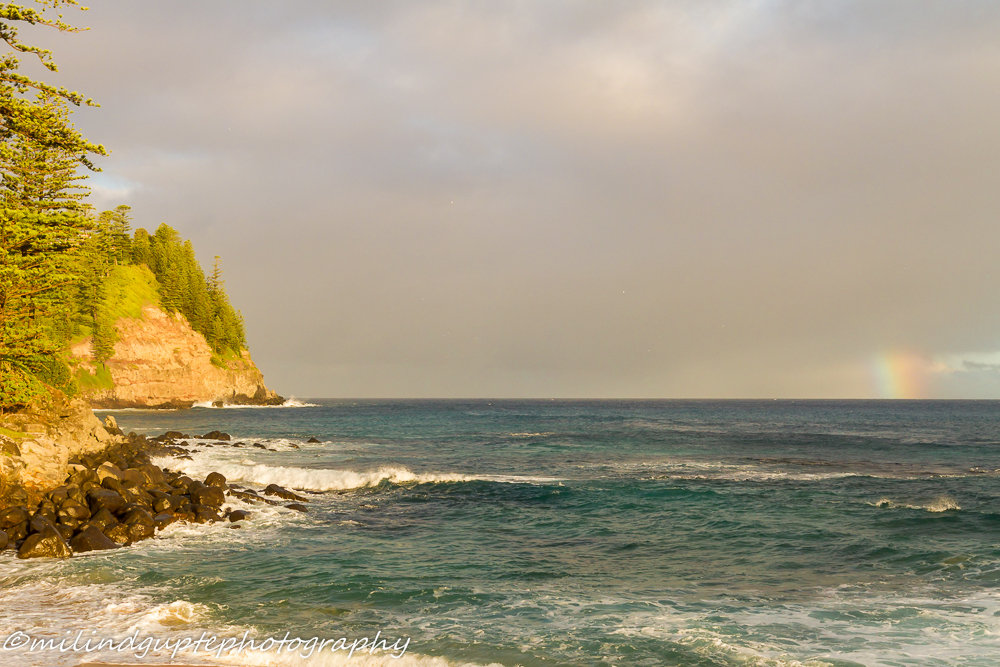
Picture
To get longer exposures in the same lighting conditions a Neutral Density [ ND] filter has to be used. It is a dark filter which effectively reduces/ blocks the amount of light reaching the camera sensor, thus requiring the camera shutter to be kept open longer [ several seconds to minutes depending on the strength of the filterand ambient light] to obtain a correct exposure. The ND filters come in different strengths. As mentioned above longer the exposure smother the effect on the water and if it is long enough it even shows in the clouds. [ first photo on left shows cloud movement]
On Norfolk Island  the beaches were only 5 minutes drive away and as we were spending most of the afternoons and evenings having picnics and BBQs by the seaside no special effort was required. I just had to get the tripod out and my camera with the wide angle lens attached and I would be set up and ready to go within a minute.
I used a Canon 7D and Canon 16-35 F4 L lens and wireless remotes for releasing the shutter with the camera eyepiece covered to prevent stray light affecting the exposure.
The maximum duration of Long exposure I did was 30 seconds, some were less. This was my first attempt and I was experimenting. The results varied depending on the length of the exposure as you can see below. I could have gone longer as the light was fading but on several occasions my LEP was cut short after just a few exposures due to salt water spray depositing on the filter. When I tried getting close to the action [ surf and waves] wind gusts caused fine salt water spray to coat the filter and that effectively stopped all LEP.
The only remedy for that was rinsing  the filter surface thoroughly in fresh water [ all water on Norfolk Island is rain water stored in tanks and is free of any chemicals] and wiping the filter clean.
When you you are doing LEP seascapes close to the water you have to be aware of the tide and never turn your back to the sea.
Once  when I was photographing big waves crashing on the rocks on the jetty on Norfolk, I was in the middle of a 30 second exposure, suddenly it struck me that if this wave was big there could be a bigger one behind and looking at the ocean I saw a freak wave bigger than anything I had seen that evening almost upon me. I grabbed the tripod with the camera in the middle of the exposure and ran as the wave crashed on the jetty dumping tons of water on  the spot where I was standing.   I was hit by the water spray but my body shielded the camera and lens. I was lucky to just get away with my back and trousers wet but the camera intact,  A seconds delay and the camera would have been a write off.
1 Comment

Norfolk Island Birds in Flight

3/3/2016

17 Comments

 
Picture
​

 Norfolk Island is a great place for bird watching. It has its own endemic species as well as other visitors.
​Many sea birds breed on Norfolk Island and other nearby smaller islands like Philip Island & Nepean Island. On this trip I brought the Canon 200-400 f4 IS USM as well as the old but trusty 70-200 f4. I gave them both a work out when I got a chance. When you are at one of the many cliff top lookouts on Norfolk Island, depending on the season, you will see many sea birds flying past or soaring overhead.  Also to be seen is the kestrel. With a bit of patience and luck you will get plenty of opportunity for honing your BIF (Birds in Flight) photography skills.


Also as you drive around you will sight the ‘Nuffka’ - Norfolk's endemic kingfisher sitting on sign posts or wires.
Pacific Golden Plovers can be sighted by the roadside on the greens feasting on grubs.
Feral chickens are everywhere with many impressive roosters and they are breeding prolifically.

We intended to visit Philip Island but couldn't because of the weather and sea conditions - this will have to wait for another trip.
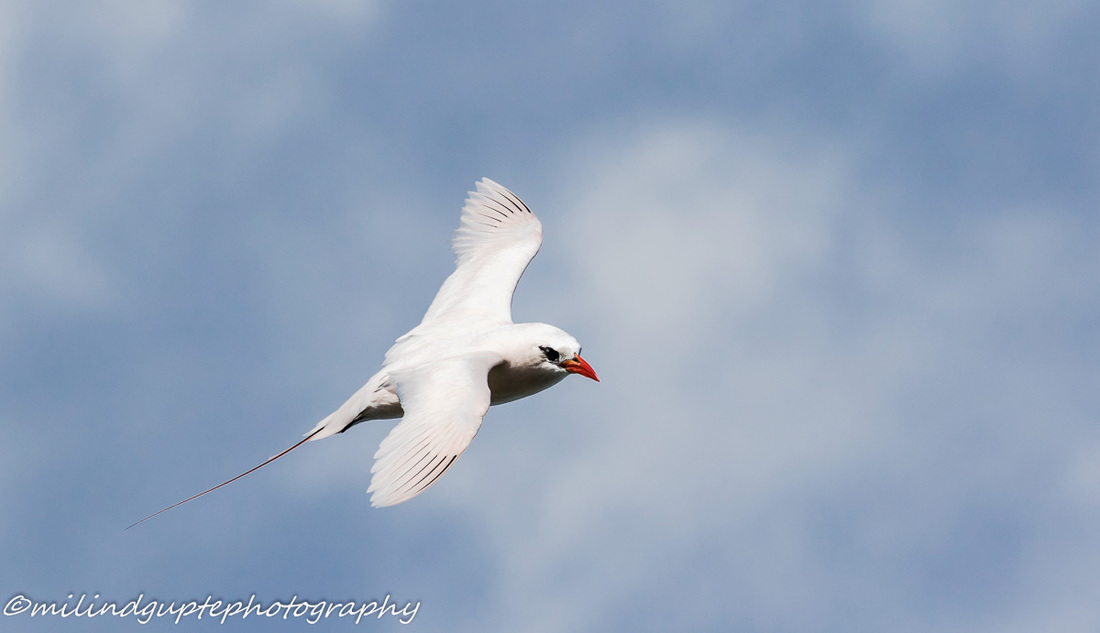
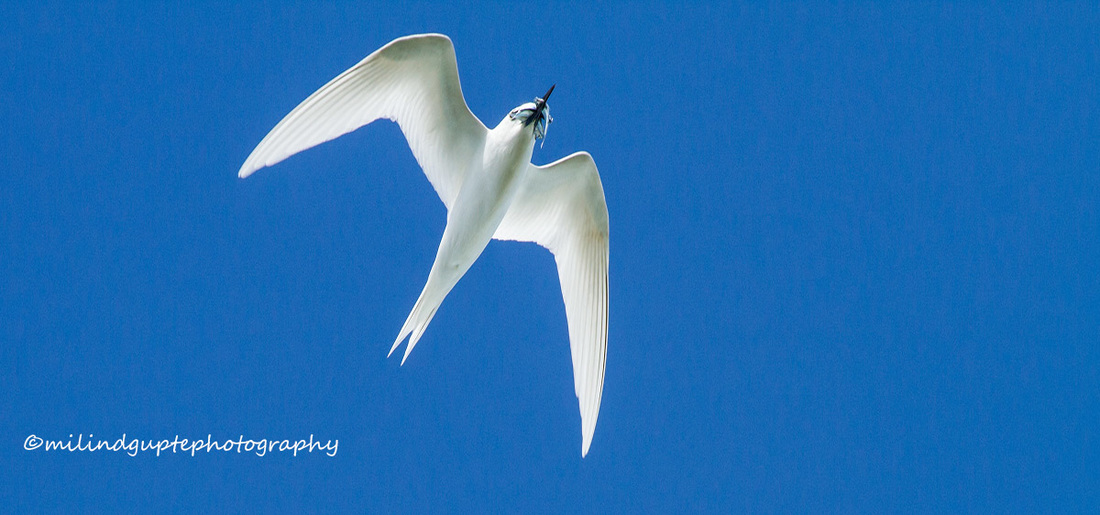
I enjoyed photographing the White Terns [ locally called Fairy terns]  and Red-tailed tropic birds.

Fairy terns nest in the Norfolk Island Pine trees. Actually there is no nest and they lay a single egg on the branch [ photo below] and hatch it and raise the chick on the bare branch. Plenty of them can be sighted in the trees and flying around. I did most of my BIF photography handholding the camera and lens. A good tripod with a gimbal head would have been ideal.

Picture
While on cliff tops you have to be careful not step into the nesting holes of Shearwaters (locally known as 'mutton birds'), and not get carried away trying to photograph birds in flight, for the danger of going over the cliff is real.
​

The above photos represent the results of some opportunistic photography. I was not able to get a decent photo of the Norfolk Island parrot and other birds, but the purpose of this visit was not primarily to seek out bird life, but to relax and see the island. 

More about my first attempt at long exposure photography in the next blog/write up.
17 Comments

Norfolk Island

2/17/2016

6 Comments

 
Picture
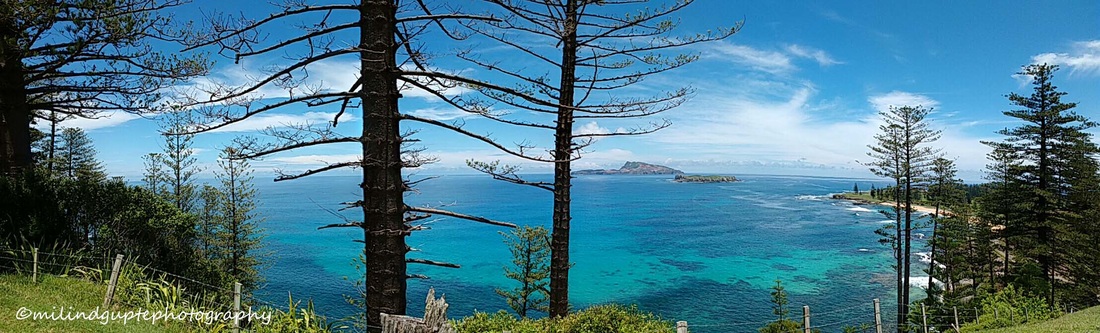
Norfolk is a tiny island in the South Pacific ocean just two hours flight away [1456 kms] from Brisbane. It is approx 35 sq km in size and an Australian territory. This is where we decided to go for a holiday to chill out - with nothing special on the agenda.
I took my camera gear along although photography was not the main intention.
The majority of the volcanic island sits approximately 100 metres above sea level, rises to 320 metres at the summit of Mt Pitt. To visit the beaches you drive downhill to see level. Sea birds are always to be found near the cliffs.  The islanders are a friendly lot and the island has plenty of history. The climate is wonderful (never rises above 24 degrees or falls below 10 degrees C) and the drive to any destination is but short. In my mind you can't go wrong if you choose this place as your holiday destination.
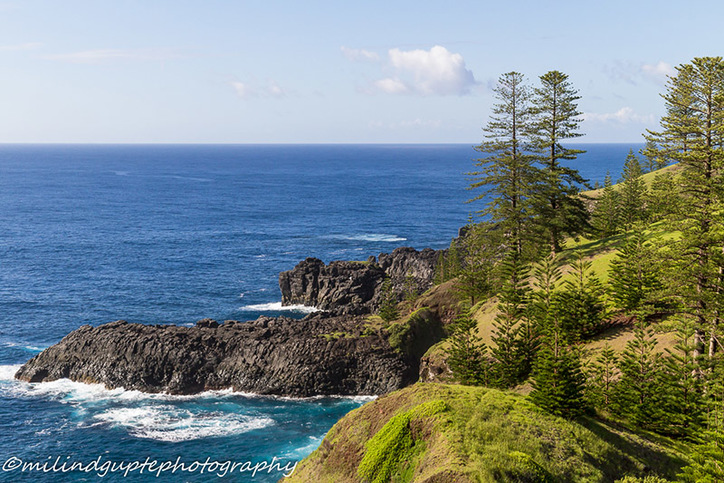
Surrounded by rocky cliffs with tall Norfolk Island pine trees & turquoise blue waters all around there are plenty of opportunities for seascapes. We enjoyed picnic lunches & evening BBQs along the shore and on some very scenic spots. I always carried the camera gear along.
Picture

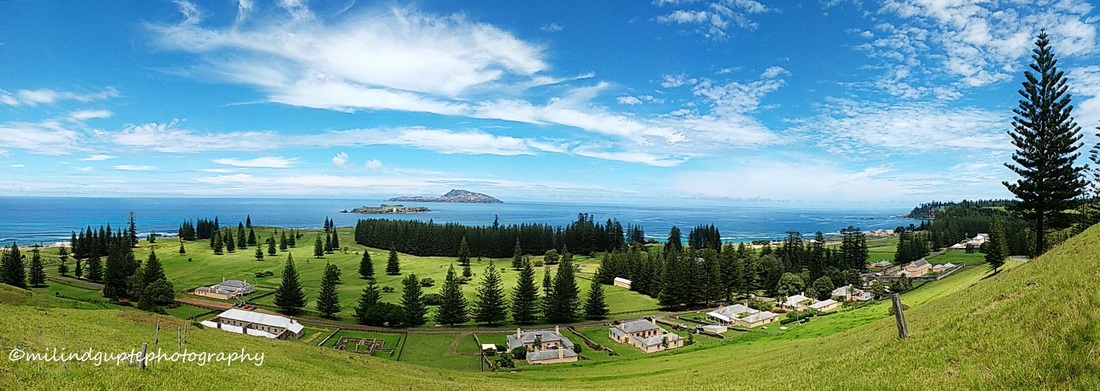
There are plenty of other photo opportunities around the island. I tried my hand for the first time at seascapes & photographed some of the ruins - a welcome relief as I was carrying only the wide angle lens and a tripod instead of long heavy lenses most of the time.

I did some bird photography. If you are ready to go off the beaten track i.e. ready to climb down narrow tracks along the cliffs you can have access to many little beaches and vantage points for seascapes. Some of these are only accessible at low tide and you have to be aware of the tide timings. One of them "Crystal Pool " is accessible by a steep narrow track and clearly sign posted - 'dangerous beyond this point - do so at your own risk' - I tried going there and almost made it but had to beat a hasty retreat as the tide had started coming in.
Another thing you will see only on Norfolk Island is the large number of feral chickens. They have been running wild for a while now and there are hundreds of them.  The roosters are pretty impressive and some of them almost resembling their ancestors [Red Jungle Fowl - gallus gallus].

I spent quite some time trying my luck with seascapes and I found it to be very pleasant and peaceful way of spending time.

Picture

 From the cliff tops I tried photographing birds in flight [BIF] and for seascapes I tried long exposure photography.
More about them in separate blogs.
As I said before photography was not the main purpose of this trip and I reached for the DSLR only rarely.
Many photos here have been shot with a smart phone camera [motog 3rd gen] and I was pleasantly surprised with the results.
It was very handy and the exposures were good.
Watch this space for more on BIF photos and long exposure seascapes.
  

6 Comments

Eastern Sedge Frog  - [Litoria fallax]

5/14/2015

1 Comment

 
Picture
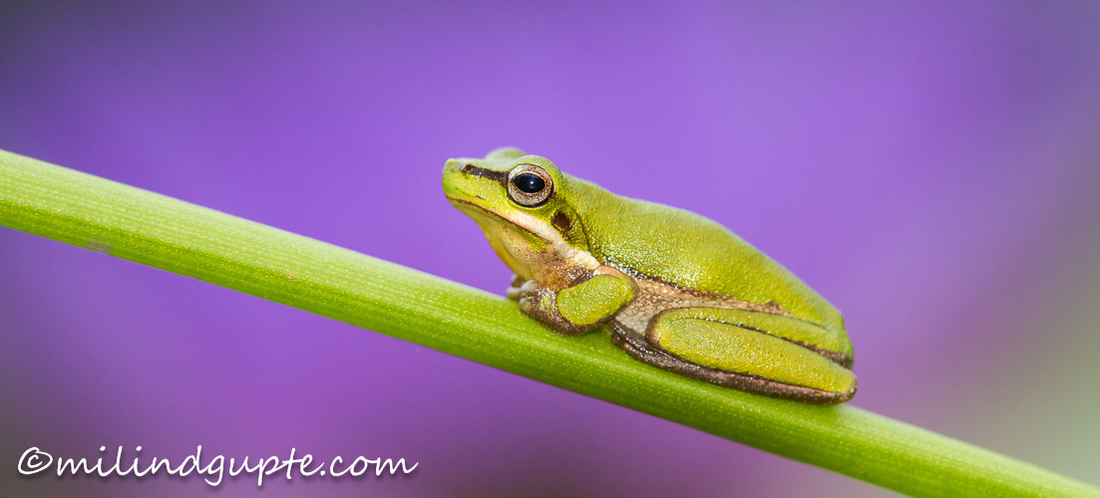
The word “ugly” is often used in conjunction with a frog. The expression “ugly frog” or “ugly as a frog” is found in literature. I find the little “ Eastern Sedge Frog” far from ugly, in fact beautiful and fascinating, so much, that I spent the last summer chasing it where ever I could find it. This is a tiny frog common in Brisbane. It is usually in and on vegetation around water bodies even little ponds.  It is green in colour with some variations and even brownish.  It is usually more common during the hot months. This year I followed them in different ponds and water bodies and gardens. They make an ideal macro subject with a contrasting dark stripe running from their nostril to the eye. S  Back of the thigh is orange in some of them.They feed on mosquitoes and other flying insects. I got shots of the full grown ones and the immature ones and the tadpoles with their long tails. Shot them clinging to the reeds, perching on flower petals and buds and floating vegetation. Because they are so small  [ 25-30 mm for an adult] they can easily sit on a petal or a floating leaf comfortably.

I tried photographing them with a 100mm 2.8 macro lens, but they used to be just out of reach, in the middle of the pond, for a decent shot. Bending over or trying to reach them was risky [ for the camera and the lens]. I did not fancy falling in the murky water with a lens and the camera round my neck.

My next option was my close focusing 300mm F4 lens. It did an admirable job of capturing images of the frogs and I could do it from a distance safely and without disturbing them. On one occasion I even used the 
Canon EF 200-400 f/4 IS USM Lens  when the frog sunning itself on a leaf was out of the range of the 300 F4 lens.


You always have a surprise in store for you as to where you are going to find them. One morning you will find them on the leaves and  on another day in another pond they will be on the flowers or their stems. This summer was quite wet in Brisbane and after a heavy shower if you head for the ponds you will find these frogs very active.


I had fun chasing them over summer and now as we are heading to winter there are fewer to be seen and photographed.

I used my monopod when I found the frogs above ground level and other times just handheld when I wanted to get close to the ground.  I have found the Canon 300 F4 lens, though an older design, to be very sharp and the Image stabilizer system on it works well. It is also my walkabout lens for birds and animals when I don’t want to be carrying the big Canon 200-400 F4 IS lens. Moreover it comes in handy not only for  the bigger species of birds and animals but also for the likes of dragon flies, damsel flies and butterflies and other larger insects even frogs.

I have blown up images shot with the 
Canon EF 300 f4 IS USM  to A0 size without a problem.

With the frog season now coming to an end I will be looking for other subjects to photograph.
1 Comment

Canon 7d mk ii with Canon 200-400 F4 IS lens & the Masked Lapwing

3/5/2015

2 Comments

 
Picture
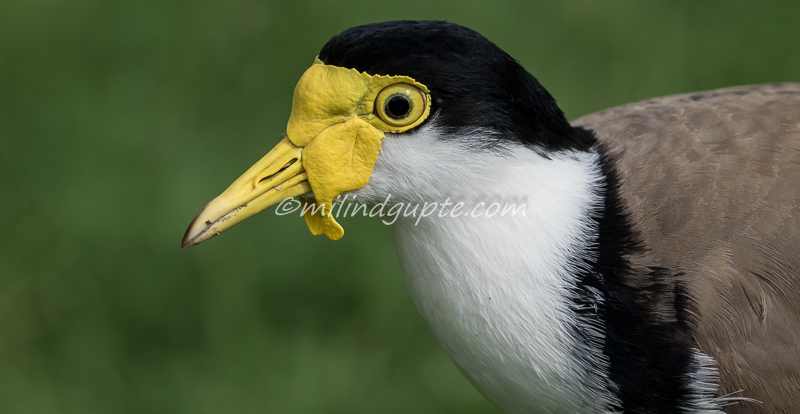
Brisbane has plenty of green reserves scattered in and around its suburbs and most of the reserves hold their share of birds. One of the more common birds to be found on the greens are the Masked Lapwings  [Vanellus Miles]. They are also called Spur winged plover as  you can see from the photos. 
Depending on the size of the reserve you are likely to find one or more pairs inhabiting them. This summer the weather, in Brisbane, on most weekends was either too wet or hot for photography so when there was a break in the weather I made it a point to go to the local reserve which had a couple of breeding pairs of lapwings.
It was fascinating to watch them. By the time I discovered them they had hatched their young. Obviously one of the pairs had bred before the other, chicks of one pair were much smaller than the other. The pair that had bred earlier were rearing only one chick whereas the other pair had 4 little chicks.
Over the next few weekends as time permitted I tried and got a few photos of the chick and the adults going about their business. 

One thing I noticed that they defended their territory not only from human intruders but from each other with a passion.
I saw them dive bombing walkers who got close to the family inadvertently. Upon hearing alarm call from the parents the chicks would lie low and the parents would fly at the intruder, even pecking on the head as they flew by.
I always kept my distance as I knew what to expect and lack of movement did help. Soon they would lose interest even when they noticed me.
The chicks were always busy finding and pulling out caterpillars and worms from the ground and they grew rapidly. As the chicks got bigger the parents reaction to intruders started getting more subdued.
As usual I had the camera and the lens mounted on my trusty monopod with a tilt and swivel head. Now my 7d mk ii is permanently attached to the Canon EF 200-400 F4 is lens. I won’t be swapping the lens or the body to avoid “dust on the sensor” issues.
I have definitely noticed improvement in autofocus. It is spot on. The images are crisp, sharp and well exposed. The combination of 7dmk ii & the Canon EF 200-400 F4 is lens is superb and a winner and I am looking forward to more opportunities to give the combination a proper workout. 

Watch this space. 


2 Comments

Canon 7D and Canon EF 200-400 F4 IS in Cairns

1/26/2015

1 Comment

 
Picture
Cairns is just a little more than 2 hours flight away from Brisbane. In October we took a week off and flew to Cairns for a holiday. It was not a dedicated photographic trip but I had taken the camera gear along. As mentioned elsewhere in my previous blogs the 200-400 f4 is lens and attached 7d body with a grip and a couple of extra batteries and spare cards along with my back pack style lens case weigh just a shade under 7 kgs, the allowed carry on baggage. The lens case is airline compatible and easily fits under the front seat or in the overhead storage, with the carrying harness and the belt it is very easy on my back and the camera gear too.

It was spring [ remember we are in the Southern Hemisphere] and the weather pleasant.

We were mainly on a holiday but the birds were everywhere and the temptation of carrying the camera along on or morning and evening walks along the sea shore was hard to resist.

I had promised Monica that I wouldn’t be loitering with the camera and lens at the ready waiting for an opportunity to arise but only if there was a real easy opportunity I would pull out the gear from the bag and shoot and I knew there would be enough of them.

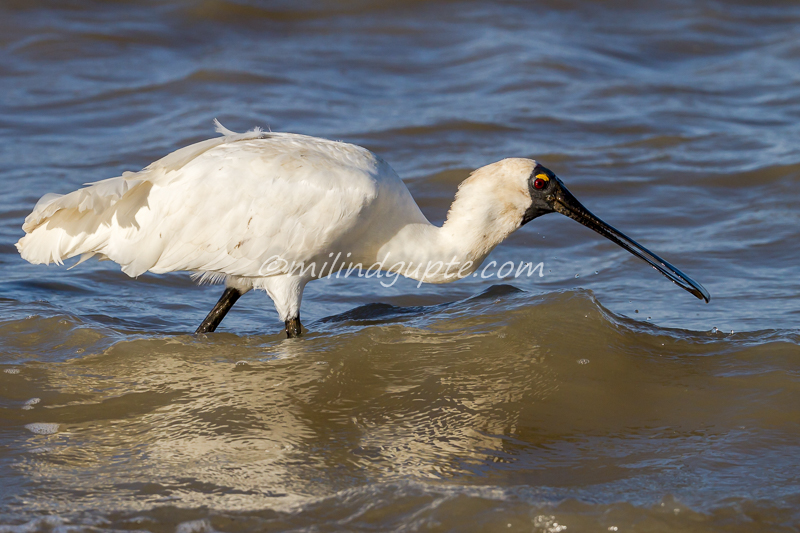
One afternoon the tide timing was right. It was just after high tide and the water had just started receding. Variety of shorebirds could be seen feeding on the mudflats but they were not accessible.  Suddenly a pair of Royal Spoonbills [Platalea regia ] flew in and landed on the waters edge and immediately commenced feeding walking along the water’s edge. They were walking in the same direction we were heading. The light was good. I pulled out the gear from the bag and mounted it on my trusty monopod. The Spoonbills were walking pretty fast moving their heads from side to side in a sweeping motion with their beaks open.

Luckily it was late afternoon and not many people around. This particular walk is very popular with the locals and the tourists [ of which there are plenty in Cairns] and it is not unusual for some kids to come and chase the birds away while their parents are proudly watching them from a distance. I have even had elderly people walk their dogs between me and the birds I was photographing and scare the birds away and last but not least, Smart phone/tablet photographers, seeing a guy with some serious gear photographing birds, would be very keen to capture a piece of the action and to get a close-up and unthinkingly just walk upto the birds with the phone/ tablets held in front of them. Now the birds being birds were not aware of their good intentions and would promptly fly away to safer environs leaving me with my heavy gear sitting in the sand and staring at the empty beach.

This afternoon I was lucky. Only the Spoonbills were very active and steadily kept walking as they fed along the waterline. I had to change my position every few seconds as they walked past me, I would, without disturbing them, move ahead and get into position shooting till they again passed me. I knew this would last only a few minutes and this stretch of sand was only a couple of hundred metres long and shortly they would be heading on to the mud flats that were out of bounds.

I had kept the camera on AI servo. Well I got a few good photos of them in action. I had reached the end of the sandy stretch and the spoonbills were heading away from me. I was sitting there contemplating my next move, just looking around to see if there was anything else to shoot before I packed my gear away. The part I hate most is packing the gear away or pulling it out.  Once it is packed away I am reluctant to pull it it out without a really good reason. As I was sitting there I suddenly noticed movement to my right and there was a pair of birds flying. Now squatting down in the sand I was not exactly prepared for BIF [ bird in flight ] photography but I reacted instantly and tried to find the birds in the viewfinder. Eventually found them and grabbed a few shots. The birds turned out to be Beach Stone Curlews [Esacus magnirostris
] .
1 Comment

Canon 7D Mark II Field review Bird photography with Canon EF 200-400 f4 IS Lens

11/23/2014

1 Comment


Picture
As soon as I came to know that Adobe had updated Lightroom (LR) with raw support for Canon 7D Mark II, I updated my LR to version 5.7 and picked up a new 7D Mark II body on Friday so I could get to know it and  play with it over the weekend. 

My previous body was the original 7D. I am not a technical person but I was eager to test the body with my Canon EF 200-400 f4 IS lens.  First thing I plugged the battery into the charger and went through the Basic Manual that comes in the box. 
 [Detailed manual is on the CD as a pdf file].I decided to go out and try the camera - lens combination with the camera as it comes out of the box [settings at factory default]. 
 Once I had a look at the results and went through the F setting guide book I would tweak the settings to my liking. Saturday turned out to be busy and it was late afternoon by the time I could go out with the Camera & lens along with the monopod. I didn't want to shoot the obligatory duck shots so the nearest water body was out of question. 

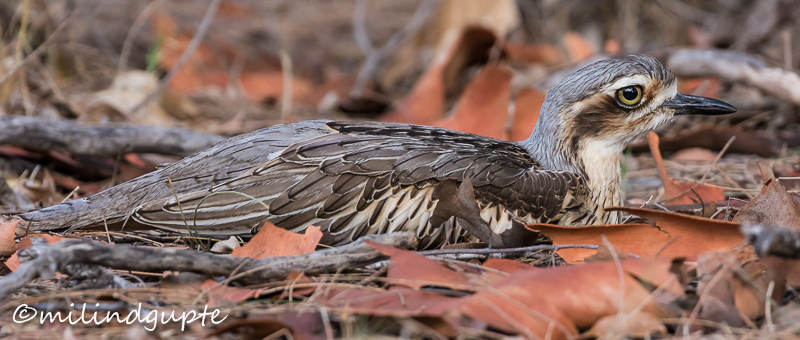
I headed to a reserve in Brisbane which I knew held a pair of Bush stone-curlews (Burhinus grallarius) also known as Bush thick knees.It was nearing sunset and these birds being nocturnal would be getting ready to venture out for the night. Sure enough they had come out of the bushes but still on the fringes, waiting for sunset and pedestrian traffic to subside.The birds were in shade, The sun was behind some trees about to set. This was a good chance to test high ISO and the cameras focusing ability.I got within range and with the monopod set as low as possible started shooting. ISO I used was 800 & 1600. The close ups are with the 1.4x converter engaged and the full birds shot at 400mm. I think I got some pretty good shots even with the shutter speed as low as 1/160. Highest shutter speed I got @ 560 mm & 1600 ISO was 1/500 sec. Remember I was using just a monopod and the camera at factory settings.
 [ More photos at the bottom]

The results were not bad for for my first attempt. That night I went through the AF setting guide and the basic manual again. I set some of the menu items to my liking and on Sunday morning set out to look for shore birds. I found a few oystercatchers on the rocks by the seaside at high tide. The birds, oystercatchers, pelicans, gulls etc. always roost on these rocks at high tide and consequently the rocks have now turned white with accumulated droppings. This morning there were only a few oystercatchers around.
I walked carefully over the big boulders with the camera mounted on the monopod and started shooting using ISO 200 & 400. It was partly cloudy and I tried shooting in both conditions - when the sun was out and even when it was covered.
It was a bit hard to single out a bird as it is a communal roost, but I did manage find some birds on the edges.
The focus locked quickly and positively, exposures were great. I was surprised by the silent shutter [ even in normal mode]. All photos without any MFA [micro focus adjustment] I am happy with the IQ [Image Quality]. It will continue to improve as I get more familiar with the camera.  The keeper rate was high. I am not a fan of 10 fps though it will come in handy in certain situations. Today I just used one shot and AI Focus.  
I didn’t get any action shots. I have still not finalised my settings for action. It will take a bit of experimenting.
Even with  this limited testing I am of the opinion that the new Canon 7D mk ii drives my Canon EF 200-400 F4 IS lens better than the original 7D.
There is definitely an upgrade in IQ and AF, & High ISO ability besides other features. I found it worth upgrading even if it was for just these features. If anyone still undecided whether to upgrade from their 7D to 7D mk ii, I would suggest “ go for it”. Christmas is round the corner and there’s no reason why you can’t be your own Santa.

No, I don’t get any money from Canon. These are just my humble findings. 

Hopefully I should be able to give the 7 d mk ii a better workout. Watch this space.

Any questions? I will try to find answers for you.

1 Comment

Canon EF 200-400 f4 IS and Canon 7D at Spring time in Brisbane

11/13/2014

0 Comments

 
Picture
 
Spring time is great for photography. With flowers blooming everywhere you have plenty of subjects to shoot. It is not only flowers, but the bees and the birds that flock to feed on them that make interesting subjects.

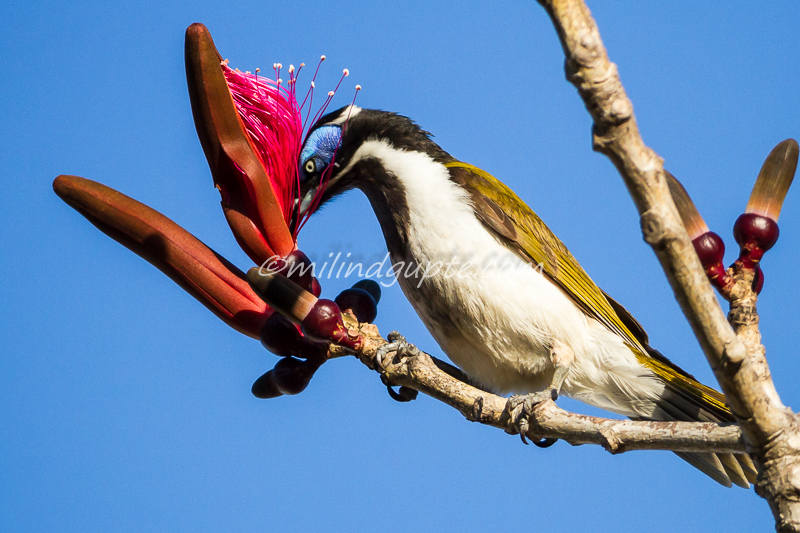
I get up early on weekends and armed with the Canon EF 200-400 f4 IS, Canon 7D and my monopod with a tilt head, drive around the reserves to find something worth shooting. One morning I spotted this tree in full bloom in a reserve from a distance. It looked very attractive with its fluorescent pink flowers against the early morning blue sky. It turned out to be the Shaving Brush Tree  [ PSEUDOBOMBAX ELLIPTICUM ].

This tree is originally from  Mexico and Central America and grows quite big. The specimen I was looking at was quite big. I got close and started photographing the lovely pink flowers against the blue sky. Through the lens I could see bees and other insects hovering over the flowers. It was not long before the first bird arrived.  I soon found out that this tree was favourite with the Blue faced honey eater [Entomyzon cyanotis].  It is a beautiful bird with olive green upper parts and a patch of bare blue skin on the sides of it,s face. In juveniles the bare patches are yellowish green.They kept coming and moved from flower to flower frequently. They never spend much time on a single flower and were constantly moving and I also noticed that they mostly fed with their backs to the sun. I had to constantly be on the alert and wait to find one with good light on it. The tree was quite tall and I was shooting at minimum 400mm but mostly with the 1.4x built in converter engaged. When the bird moved to another flower it was challenging to find it again in the viewfinder. The birds movements were sudden and unpredictable. I patiently kept on following them and my patience was rewarded. but the action was fast. Finding it in the viewfinder, locking focus and shooting kept me on my toes.

Again the monopod helped a lot, taking the weight off my hands and keeping me mobile as I had to move constantly to where the birds were feeding. I find this combo very handy for field photography.

I'm on planning on buying a 7D mk ii shortly. I would love to hear from anyone who is already using  a 7D mk ii for bird and wildlife photoography.
0 Comments
<<Previous

    Archives

    October 2017
    September 2016
    March 2016
    February 2016
    May 2015
    March 2015
    January 2015
    November 2014
    October 2014
    May 2014
    April 2014
    February 2014
    January 2014
    December 2013
    November 2013
    October 2013

    Categories

    All
    Canon EF 200 400 F4 IS
    Canon EF 200-400 F4 IS
    Indian Elephant
    Jungle Safari
    Kabini
    Osprey
    White Faced Heron

    RSS Feed

Powered by Create your own unique website with customizable templates.
  • HOME
  • BIRDS
  • ANIMALS
  • Flowers
  • BUTTERFLIES & INSECTS
  • Reptiles
  • Blog