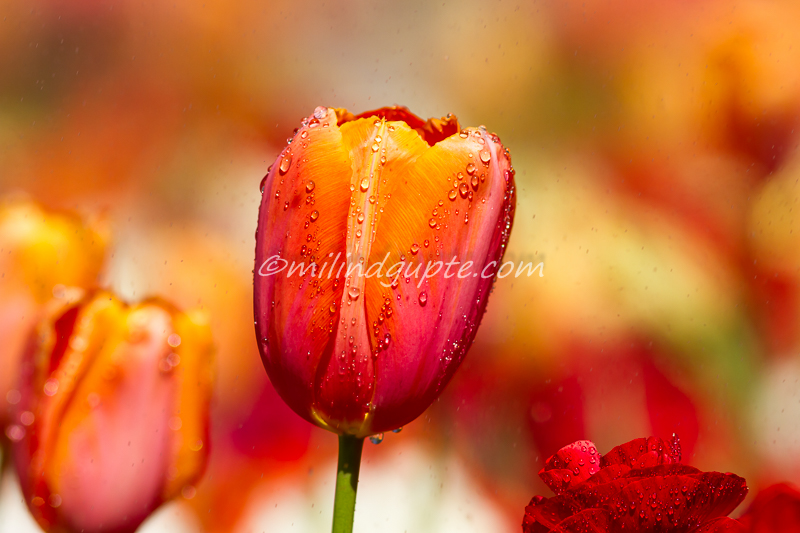
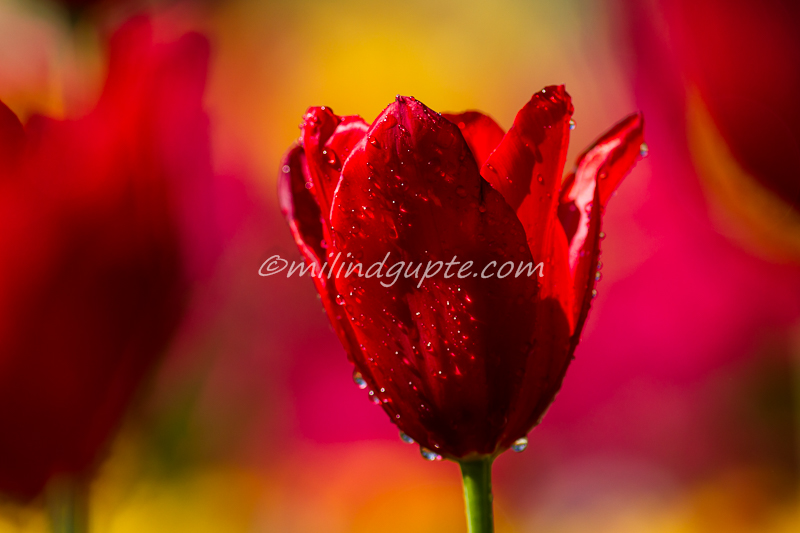
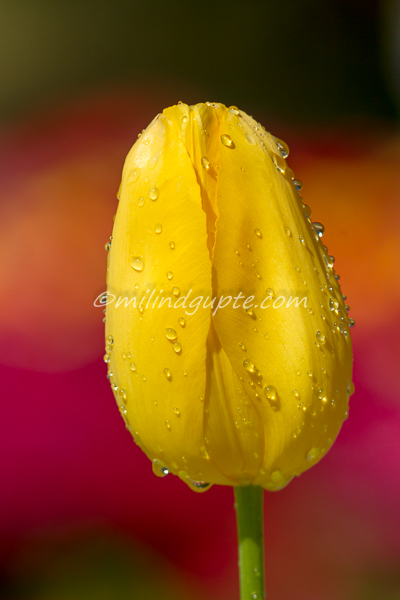
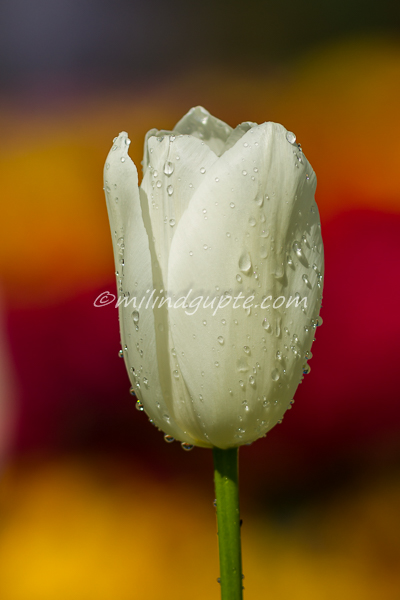
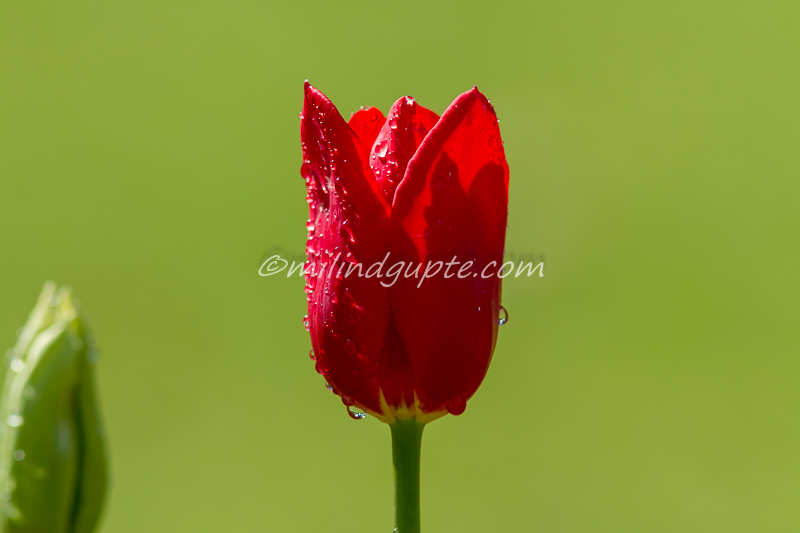
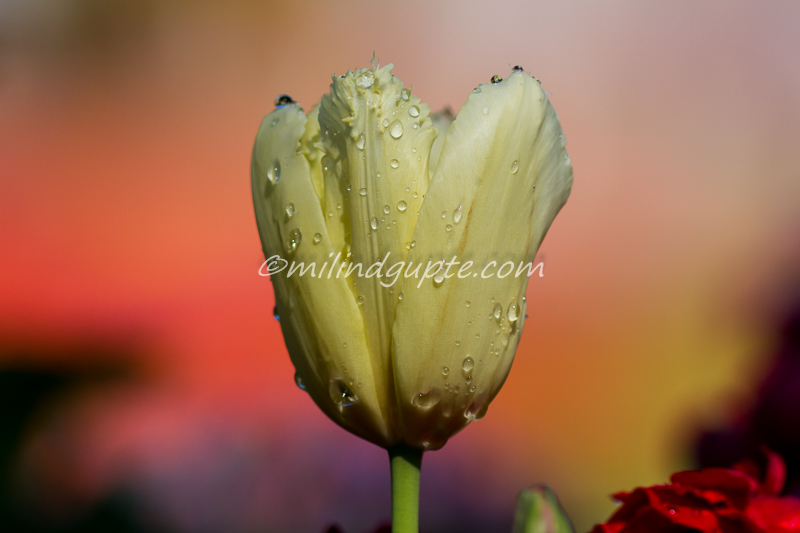
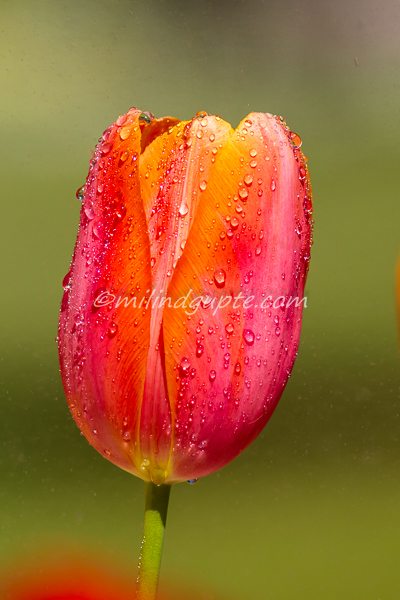
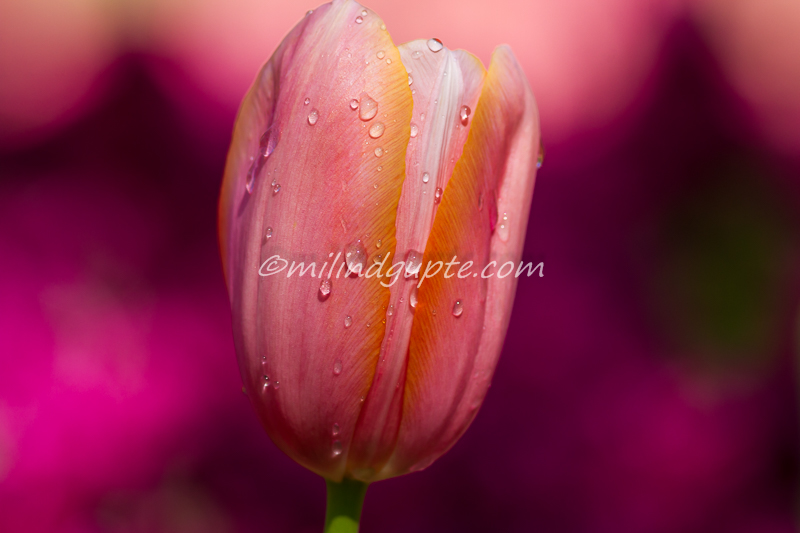
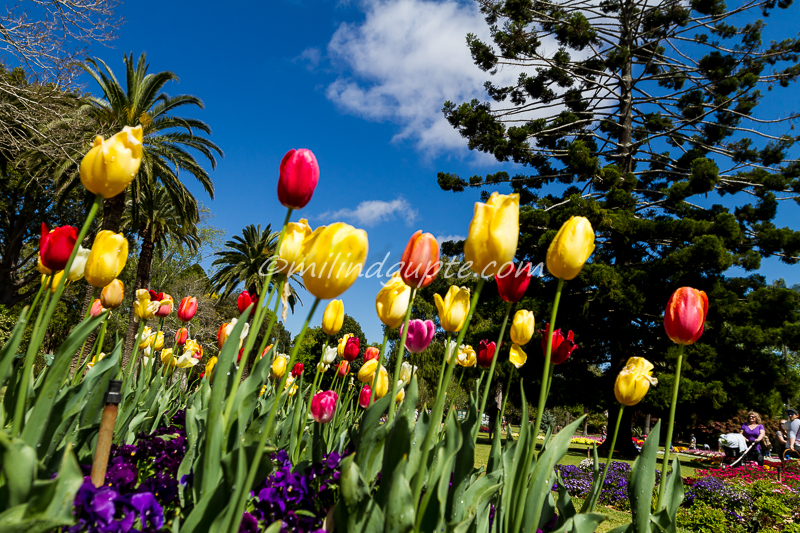
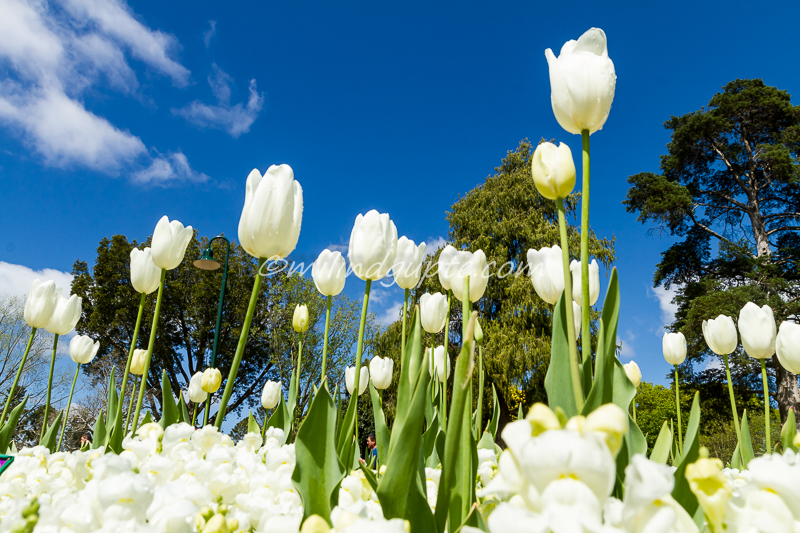
 I love tulips. Brisbane where I live is warm and tulips don’t grow here though the winter is cool. The nearest place where I can find tulips in spring is Toowoomba which is little more than an hours drive from home. Every year early spring I make a trip to Toowoomba just to photograph tulips. You find them in Queens park. There are other flowers also and around the Toowoomba flower festival Queens park is very colourful with neatly arranged flower beds of different flowers.They plant different varieties every year. There are not too many flower beds with tulips there but just enough to keep me busy for a couple of hours and a picnic in the park afterwards. Some years the variety you get is not great [ anyway there is not too many of them there] but still it is worth an hours drive and half a day out. This year I mostly used my Canon EF 300mm f/4 L IS USM Lens for tulips and my 100mm 2.8 macro sparingly. I use the Canon EF 300mm f/4 L IS USM Lens on a monopod with a swivel head and it suits my style of working. The monopod can go very low and get me down to flower level. The image stabiliser though of the older version works very well and the lens is very sharp. It is my favourite walkabout lens.
0 Comments
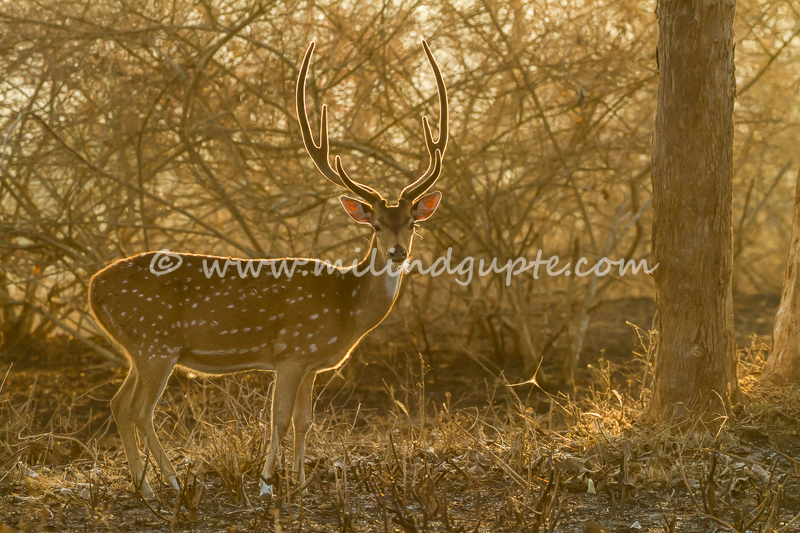
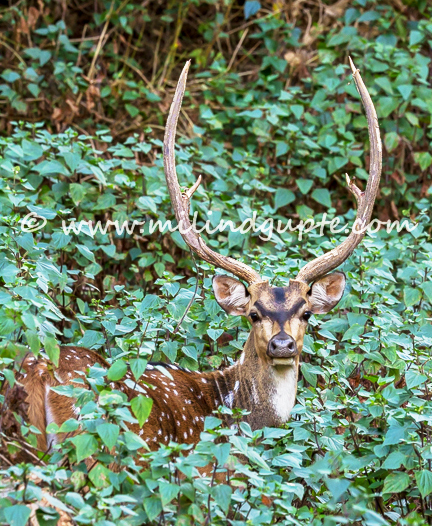
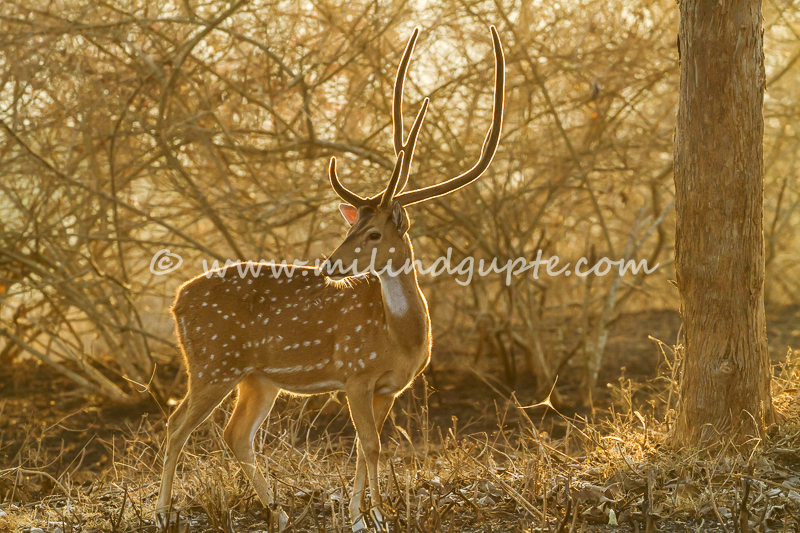
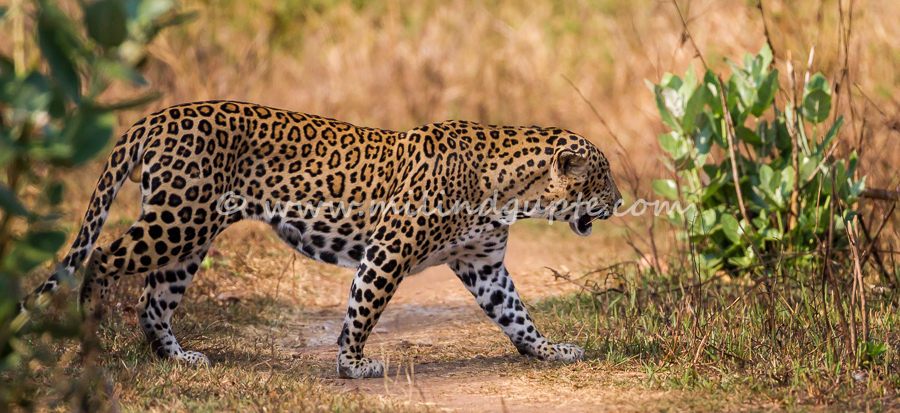 King of the Indian jungles “Tiger” eluded me. We had a few narrow misses. Saw plenty of sign, heard alarm calls but no no sighting. However one morning we had a fleeting sighting of the even more elusive Leopard. Driving along a jungle track we heard alarm calls and in the distance we saw a male leopard walking along the same track with his back to us. This is where the built in 1.4x converter came into play. But photographing a big cats tail end is not much fun. I was hoping he would turn sideways or look backwards. A group of Chital [spotted deer] crossed the track ahead of him and grabbed his attention. Immediately he turned right and in a few steps vanished into the thick undergrowth by the side of the track. He was evidently in hunting mode as we could tell from his empty belly so as soon as he saw the deer he slunk into dense cover to stalk them. With everyone in the vehicle clamouring to get shots it was hard to see him. I managed a couple of shots as he vanished into the undergrowth. Lack of sighting of the big cats does not bother me too much. If you keep your eyes peeled there are so many photo opportunities in the jungle. You just have to realise and seize the opportunity. It is a bit hard if you are sharing the vehicle with other people who are just not interested in the lesser fauna of the Jungle. The leopard was sighted in Kabini. Freshwater crocodiles are found by the water and monkeys are everywhere. Birds abound in the trees. You are never short of subjects to photograph in the Indian jungle. 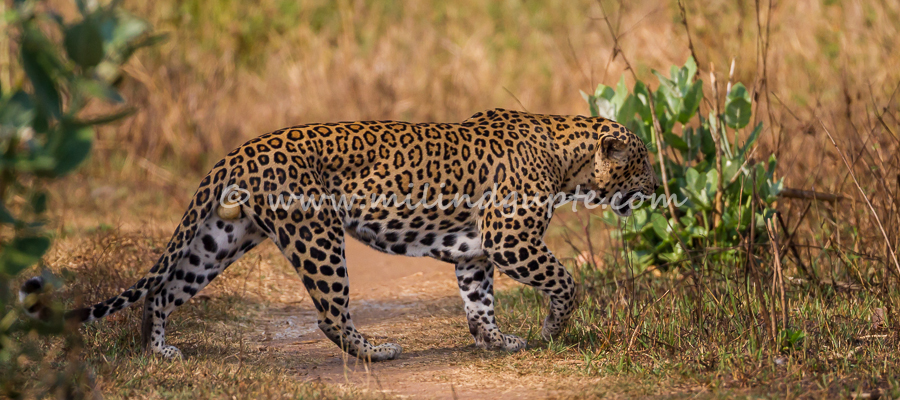 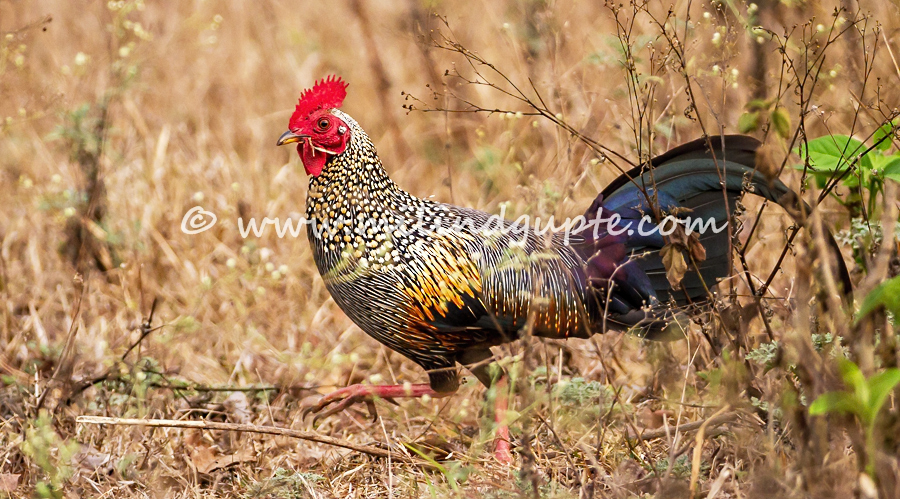
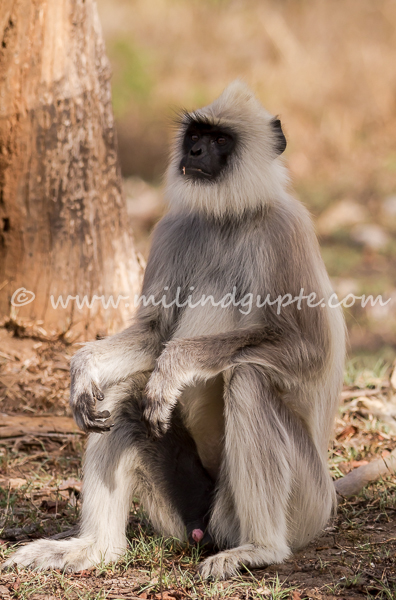
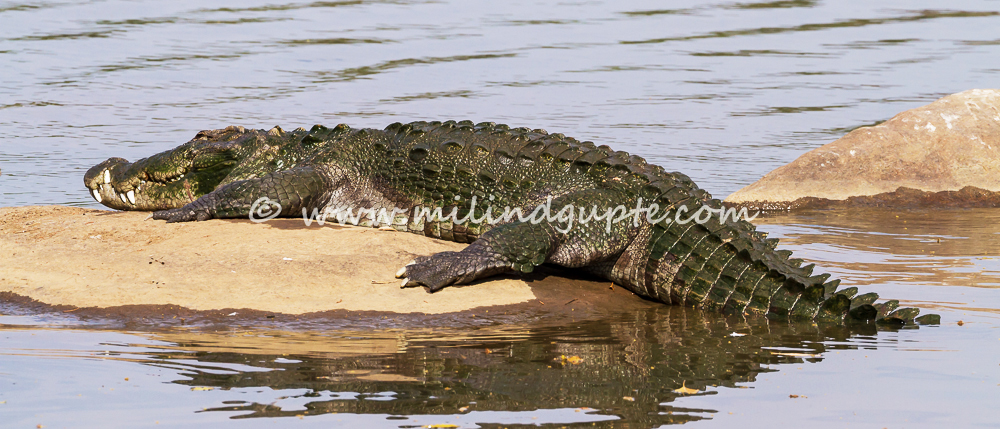
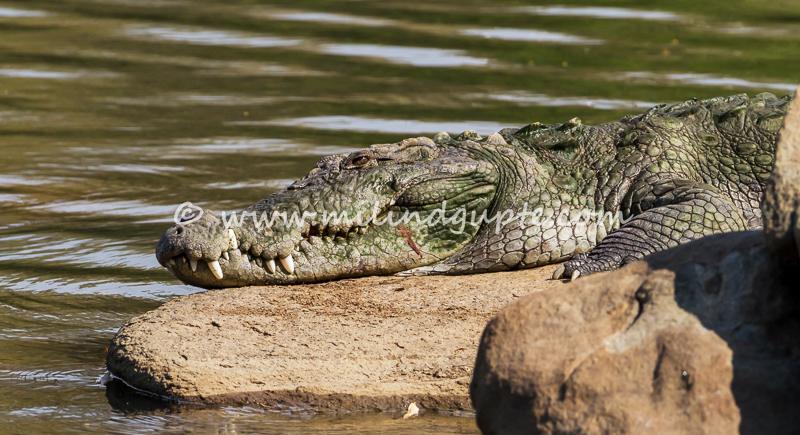
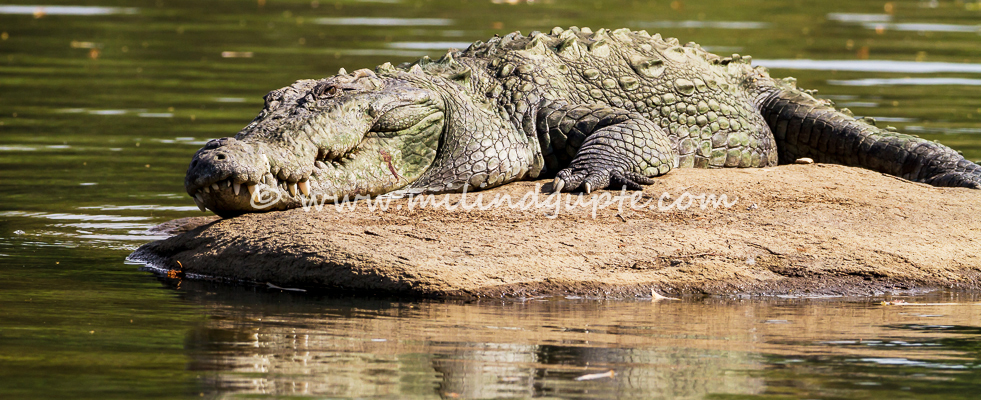
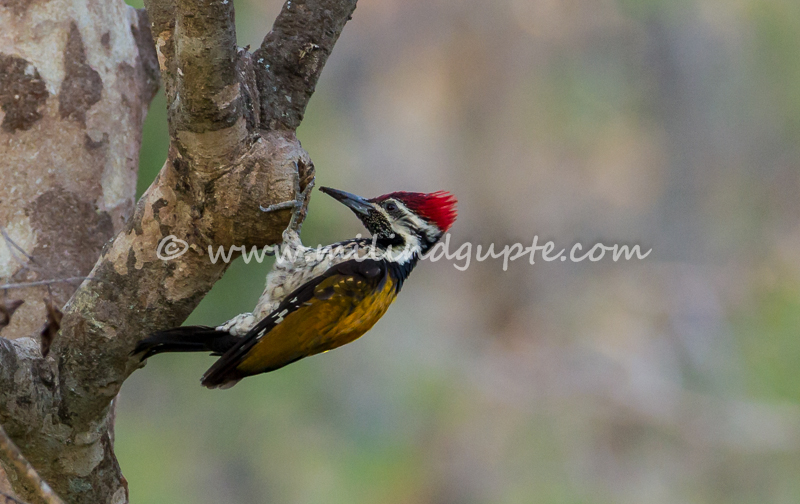
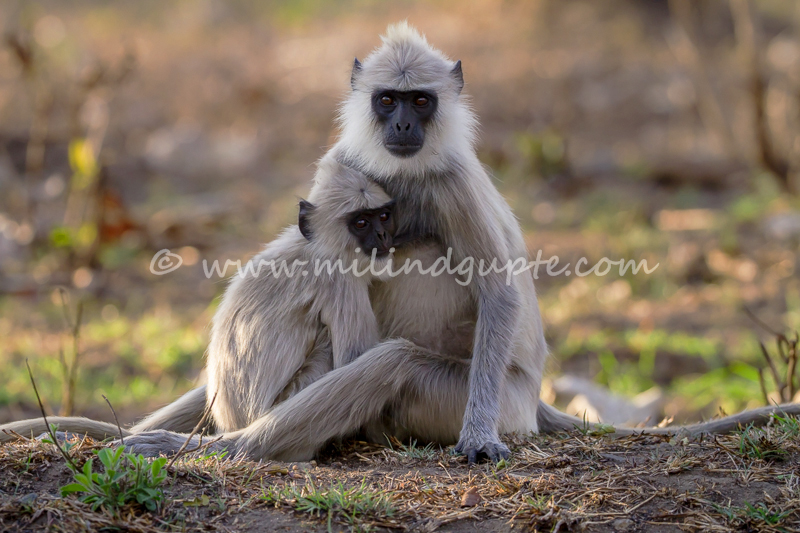
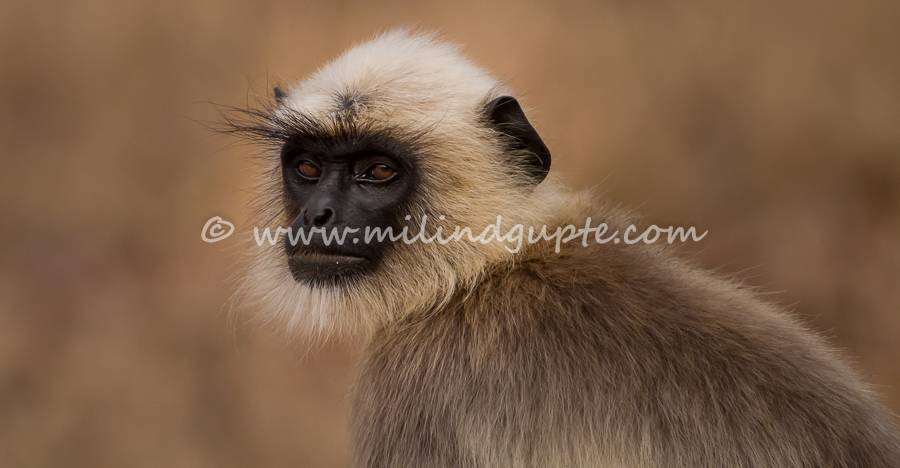
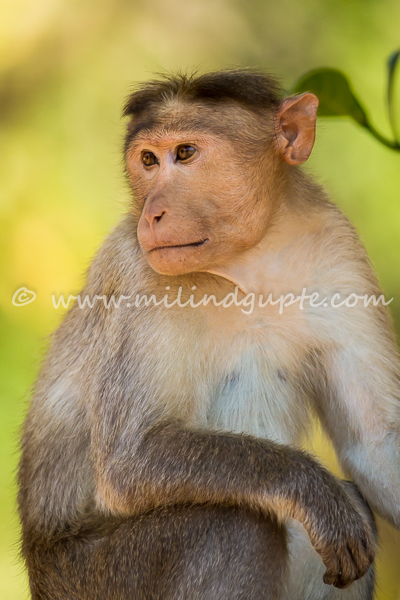
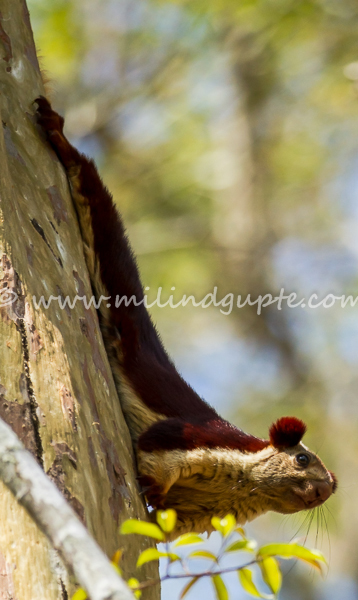
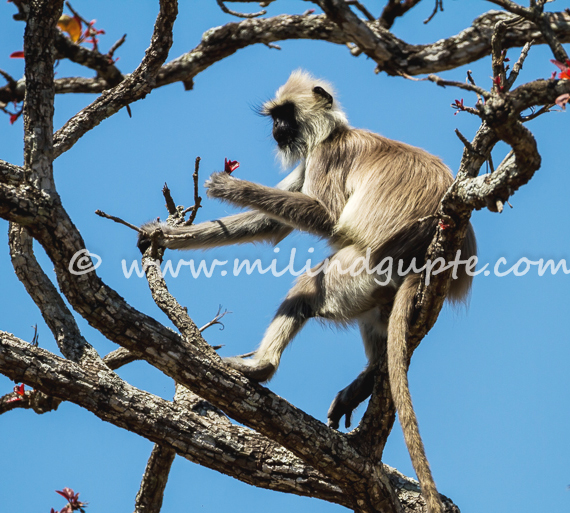
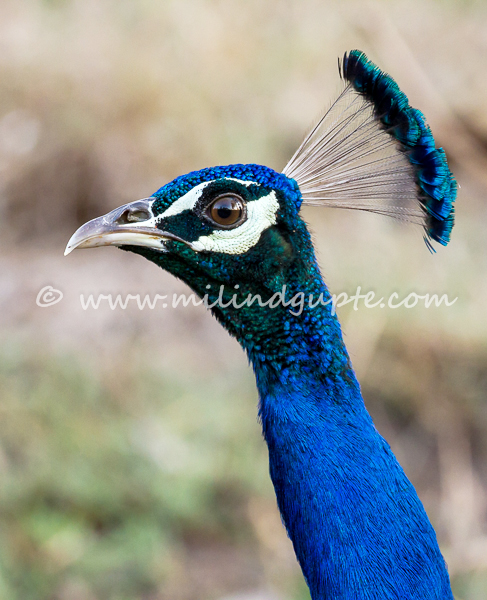
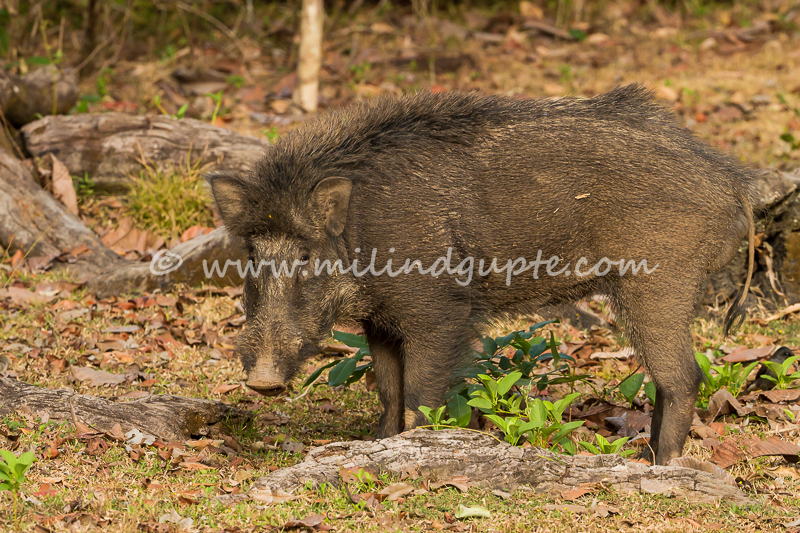
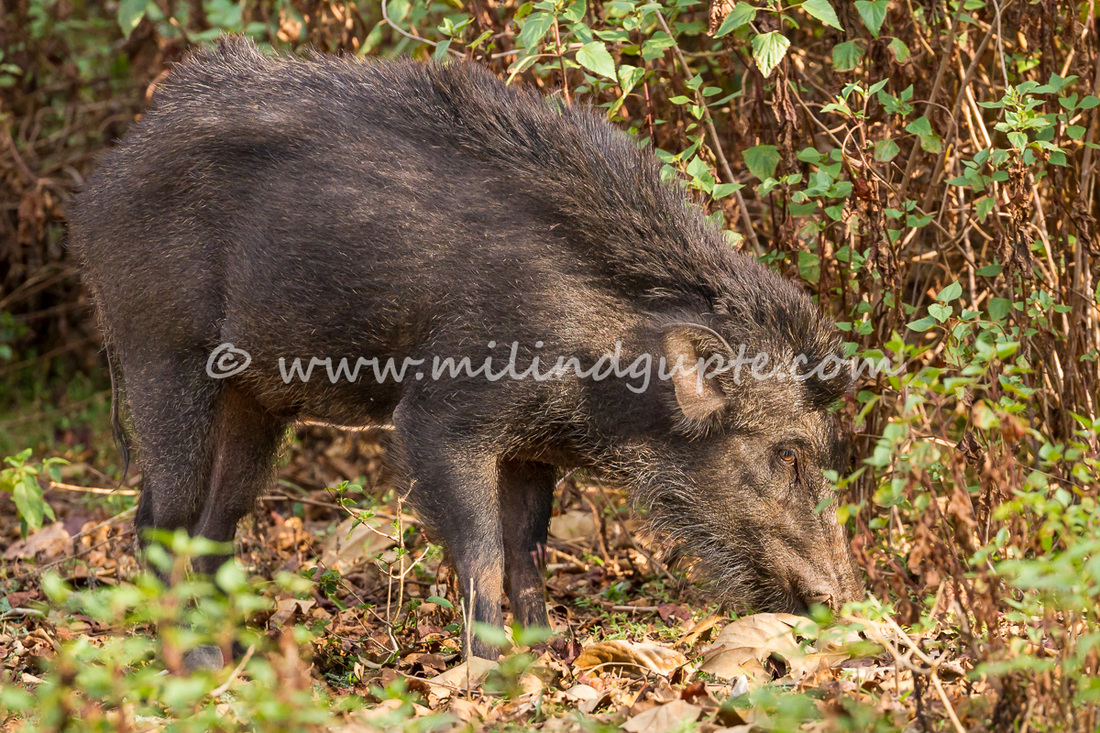
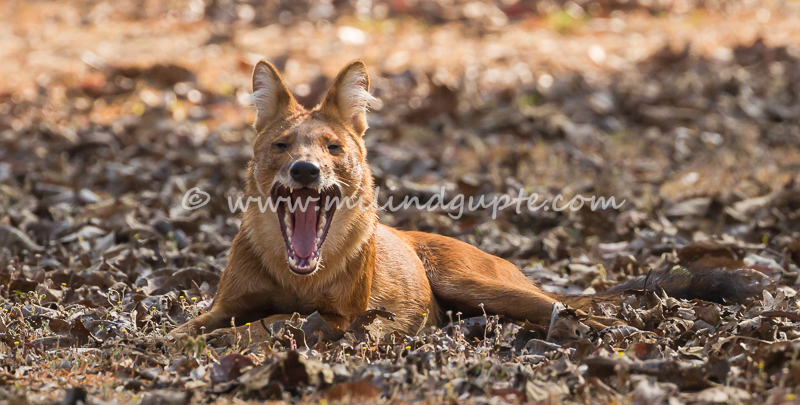
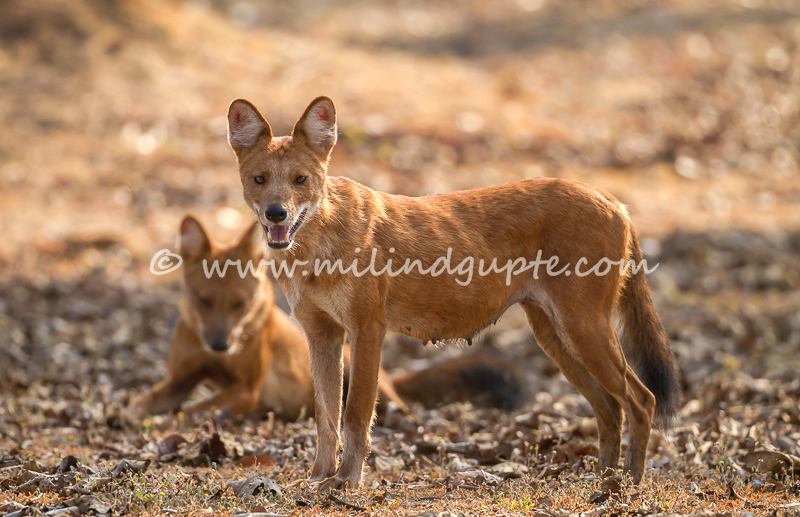
Lesser fauna of the Indian Jungles & the Canon EF 200-400 F4 is lens When you are in an Indian jungle you will find everybody chasing the Big Cats. Even the majestic tuskers seem to be ignored. Right from the driver of your safari vehicle , your guide and other tourists armed with ipads, iphones, and photographers with serious equipment all appear to be interested only in Tigers or Leopards. Not that I am not interested in the Big Cats but I also admire the beauty of the lesser animals and love to photograph them. So when I declared that I would like to photograph any denizen of the jungle which presented even a half decent photo opportunity, all the people in the safari vehicle were stunned, to put it mildly. How and why could a photographer with some serious equipment be interested in the lesser animals which were not worth even a look. They kept mum but their looks said it all. I did lose a lot of opportunities due to the driver going too fast to stop in time. I love the sight of a peacock in full plumage and the jungle fowl strutting proudly with sunlight on it feathers. A healthy wild boar is also worthy of a few clicks and also the Indian wild dog. The Malabar Giant Squirrel is always a welcome sight and not too hard to spot if you look up in the trees. Monkeys always amuse me and they too make good subjects. Here I am talking about the ones found in the jungle and not around the camp or quarters where you are staying. Crocodiles in the rivers also look impressive and we were lucky to spot this big moss covered one. I have a few more photos to process and I will add them to my next update. 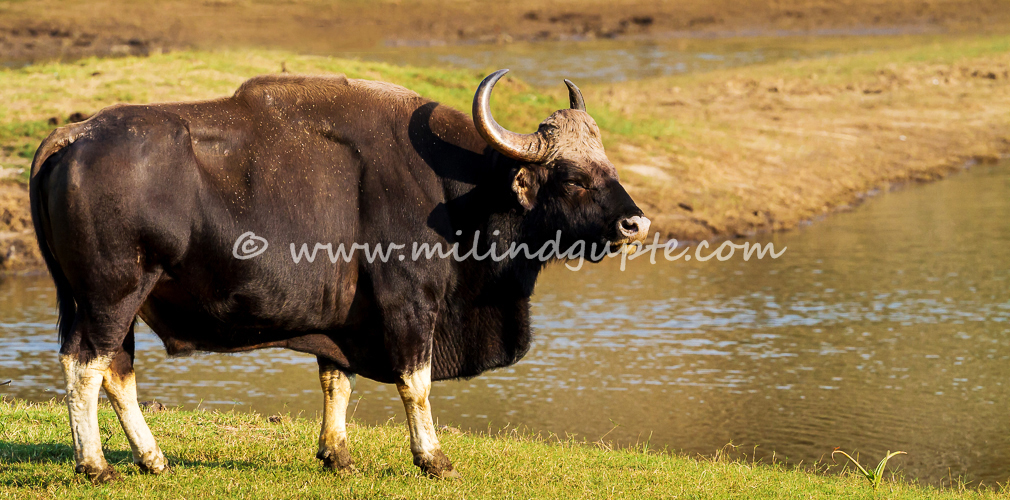
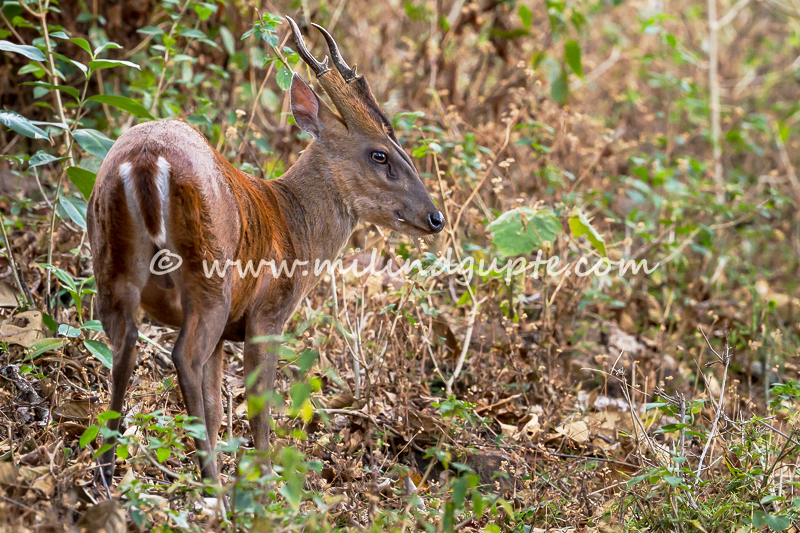
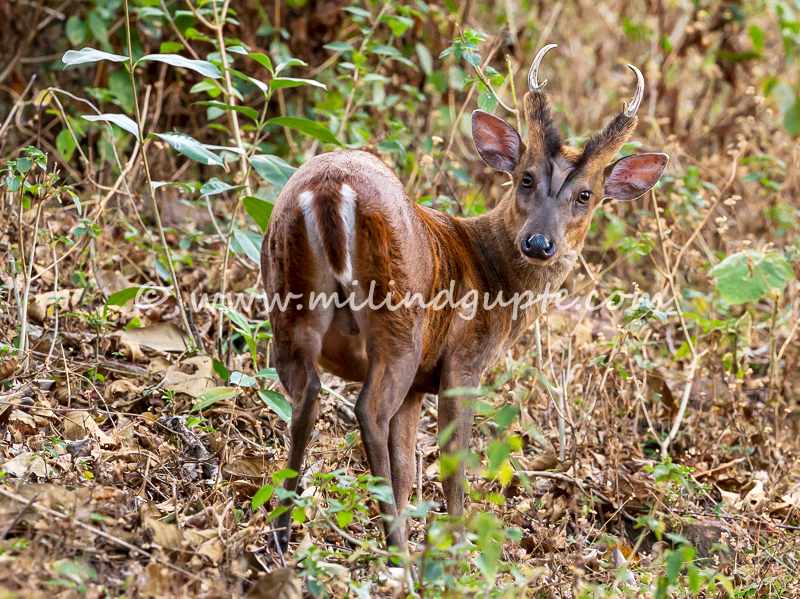
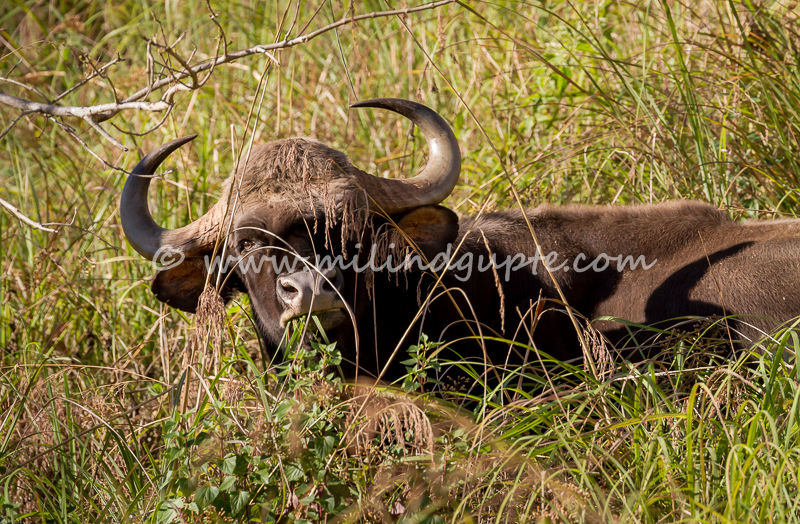
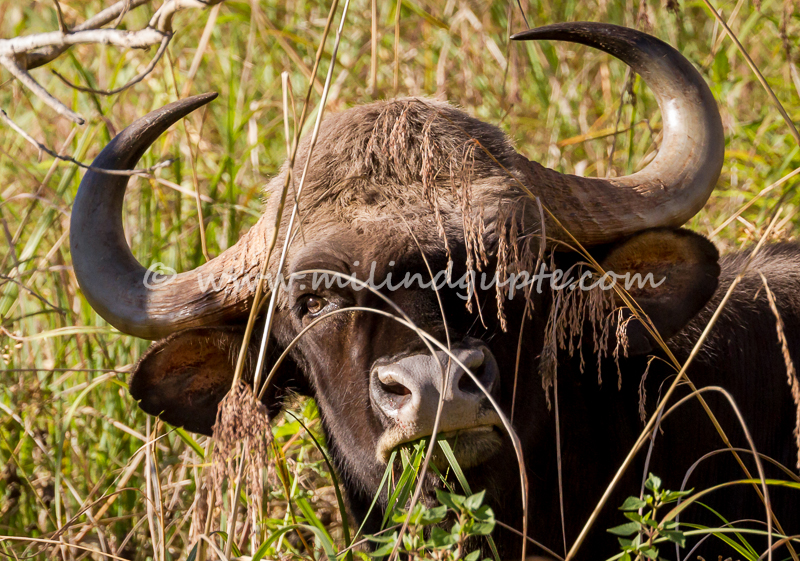
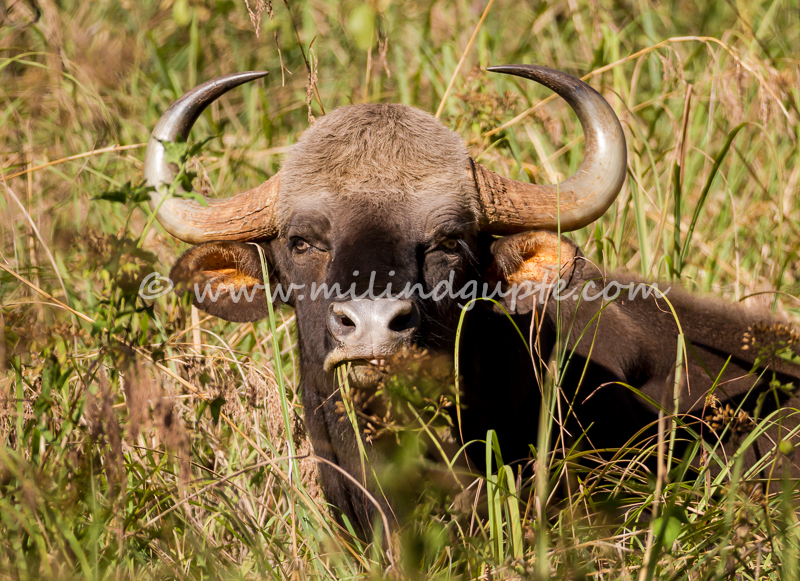
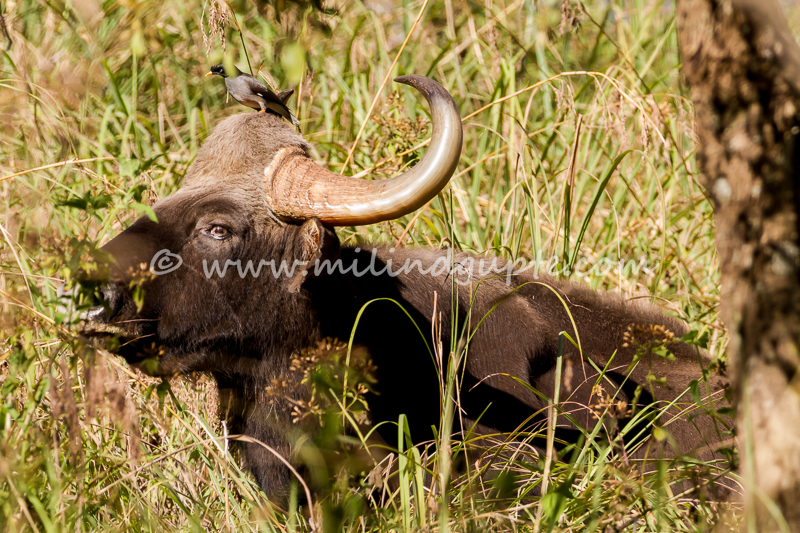
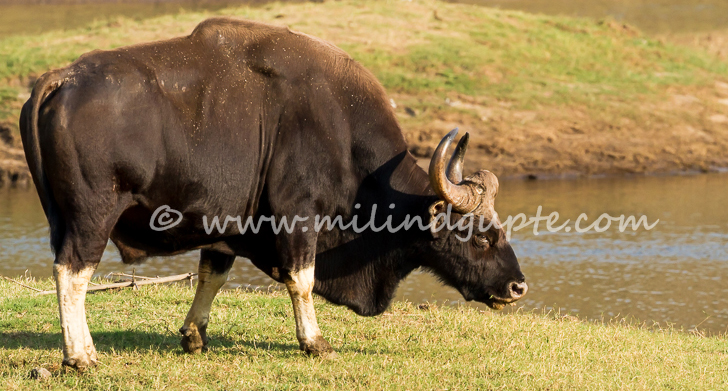
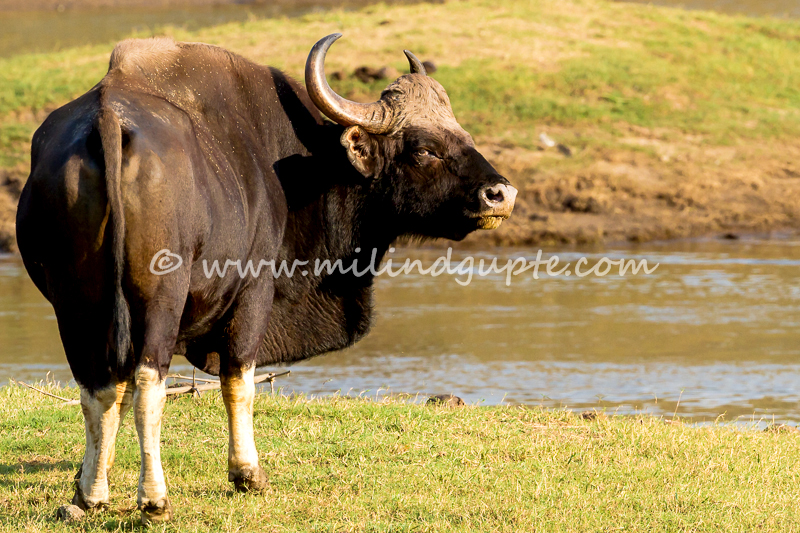
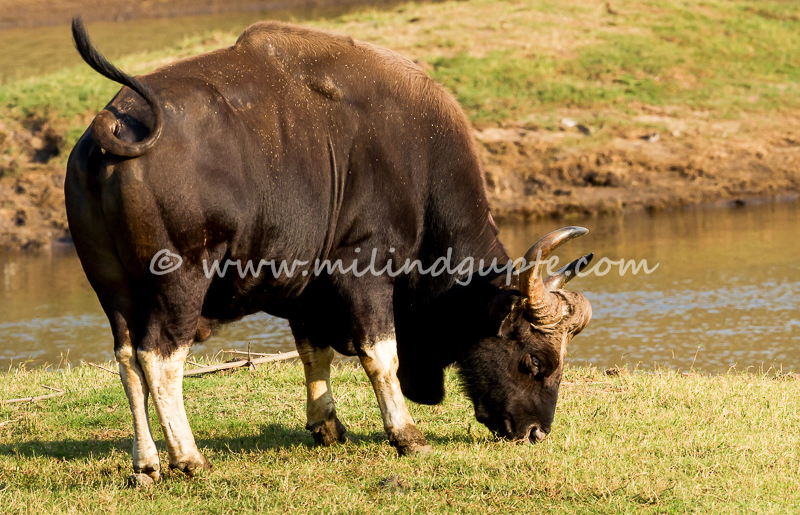
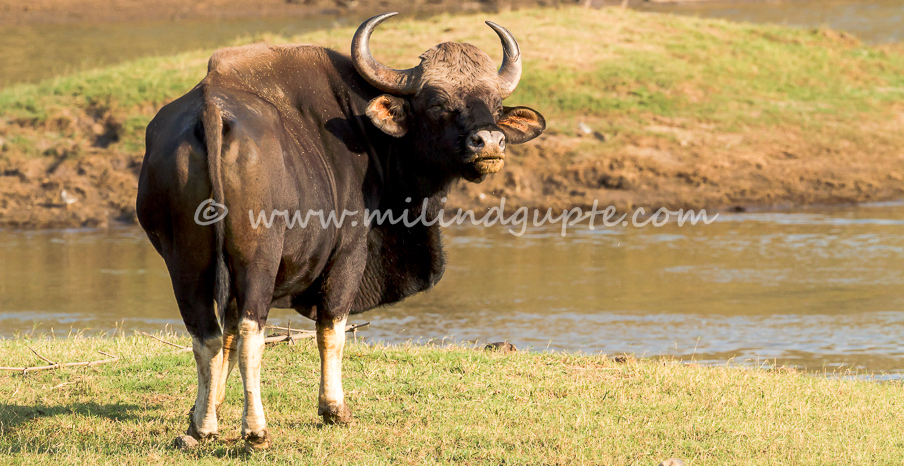
BR hills was another jungle which we visited. The safari arrangements were the same and as the name suggests it was in the hills. We got a few decent shots of mammals but did not sight any big cats. Lantana was thick and tall here and we missed quite a few good shots. In BR hills usually the vehicle would be travelling along a jungle road with a valley on one side and a hill on the other. Again we had to be out of the jungle by 6.00 pm [ sunset]. One evening as we were heading back to camp we surprised a Barking Deer [ Indian muntjac (Muntiacus muntjak] which ran up the hillside. It was already getting dark and the hill happened to be on the west side behind which the sun was setting making the light almost unsuitable for photography. Fortunately the deer ran up a little distance and stood perfectly still. We got our bean bags into position and started to shoot. These deer have canines sticking out of their mouths. The deer decided cooperate by turning to look at us for a few seconds. Of course the shots were taken at high ISO and very low shutter speeds. I still managed to get a few OK ones. We spotted a Gaur feeding on a hillside in the morning. It would stop and look at us sometimes with grass still in its mouth. The grass on the hillside was tall and angle was steep. ] Only way I could shoot was standing in the back of the vehicle.It was quite a distance away & uphill. I was shooting "almost handheld". Standing in the 4wd with only support from the vertical bars for the canopy of the vehicle. I rested the back of my left hand against the thin bar. The gaur shots, a dark subject in good light- off centre sensors used came out tack sharp every time. The detail that the lens managed to get was amazing The low res shots below won’t really do justice but the fine hair on the gaur’s face can be made out. Gaur or the Indian Bison [Bos gaurus ] is the largest bovine. It belongs to the ox/cattle family and is large and well muscled. Both the male and female have horns. Full grown males are a sight to behold standing over 6 feet tall, muscles rippling & the beautifully curved horns glistening. It is even larger than the African Cape Buffalo.They have no natural predators and do not fear even the tiger. Tiger will prey on calves or smaller females. Male tigers have been know to bring down these big male gaur [ in Kanha] but only after hamstringing. While at Kabini we managed to catch a big male out in the open grazing by himself on the green grass in good light [ photos below] More of the lesser animals and a few of the leopard here soon. 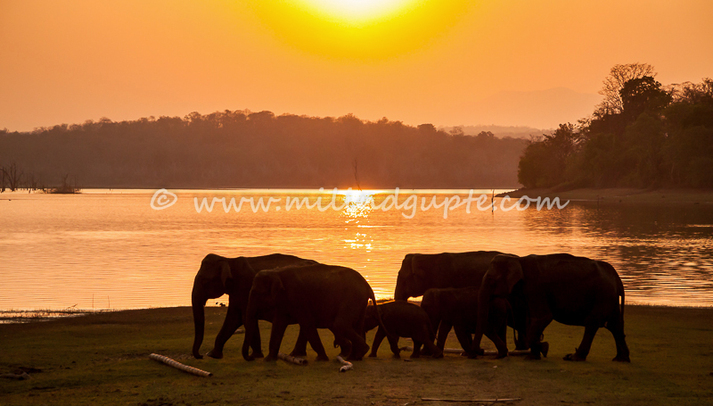
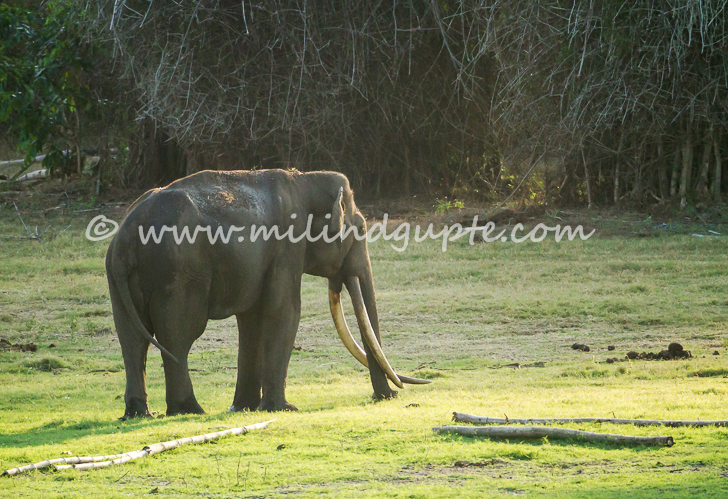
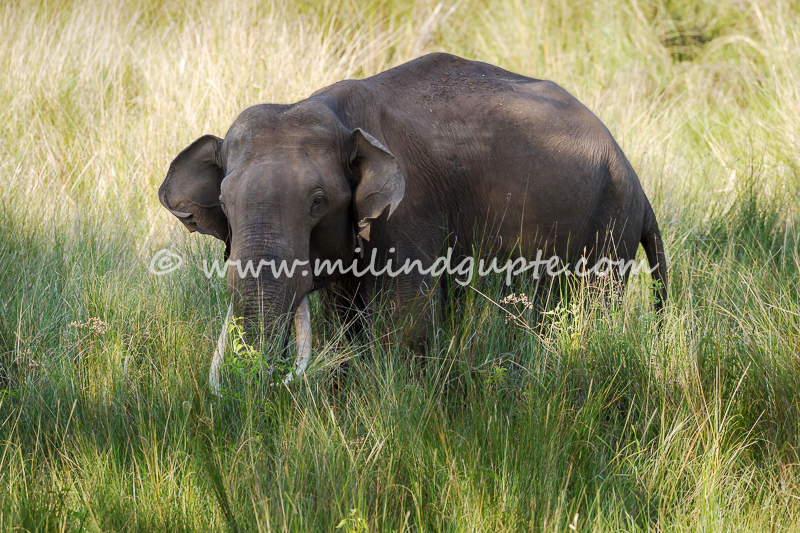
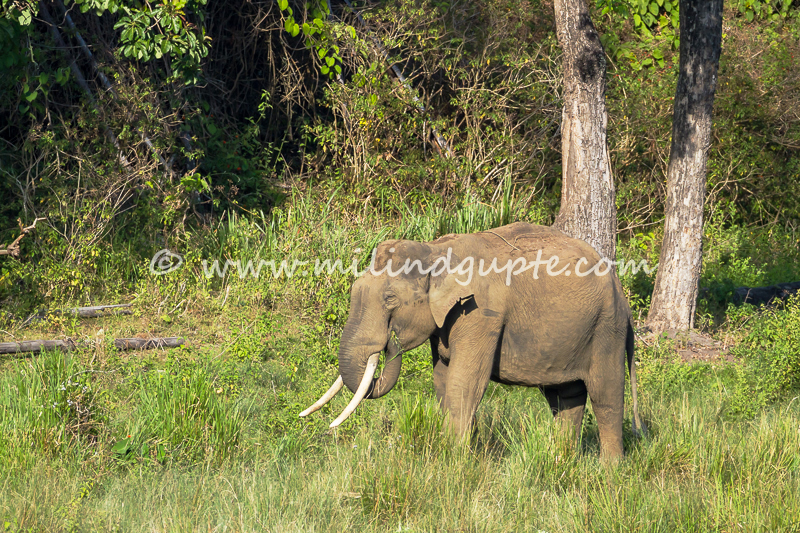
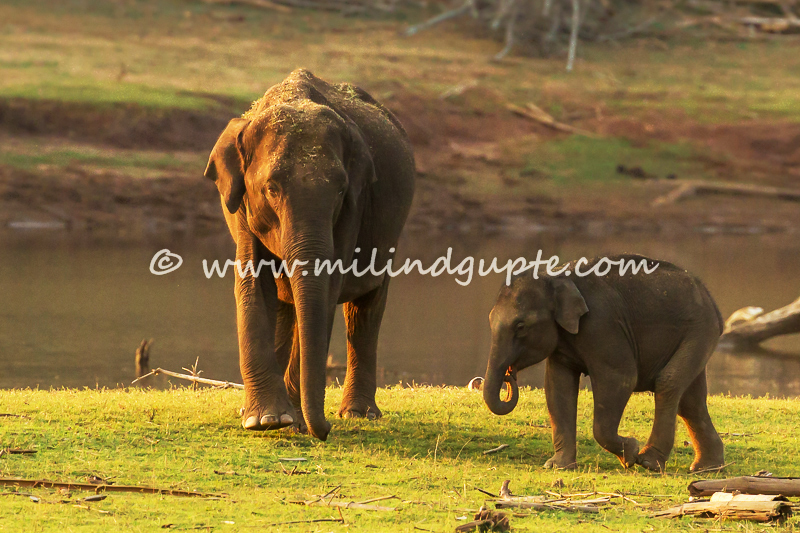
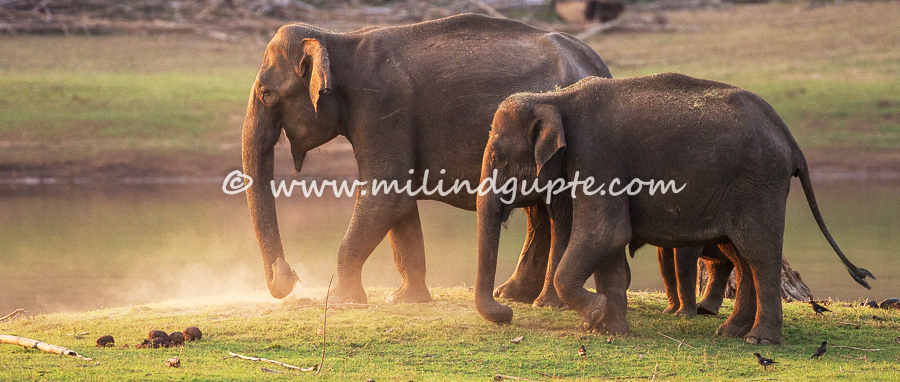
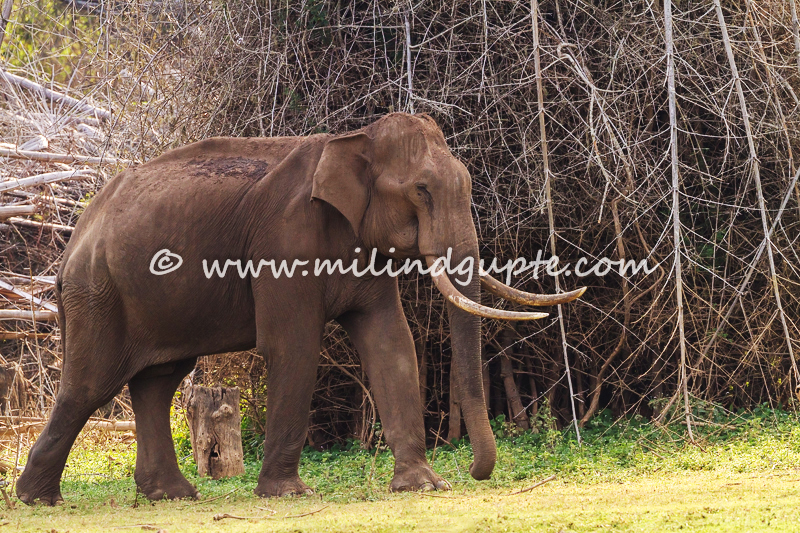
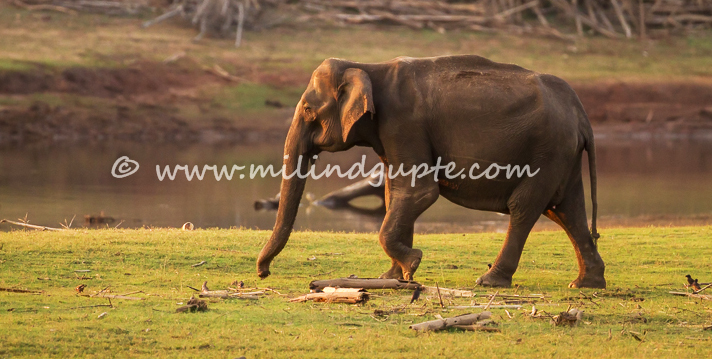
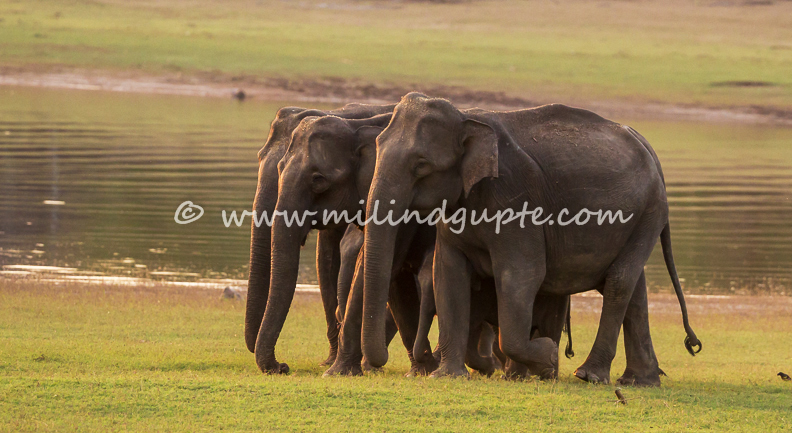
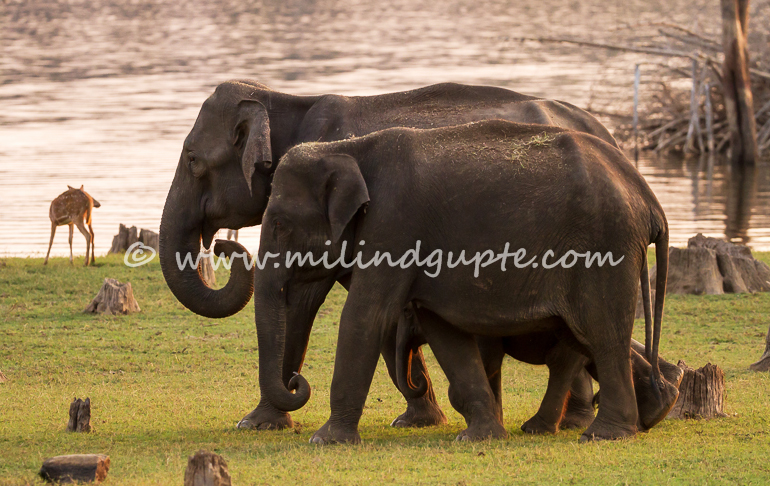
Indian Jungle Safari & the Canon 200-400 F4L IS lens I can’t think of a better place than the Indian Jungles to try out the Canon 200-400 F4L IS lens. This March I was in India for some work and decided to steal some time out in the Indian Jungles. My mate organised a trip to a few jungles in South India. The animals we would expect to see were, Elephants Tiger, Leopard, Gaur, Deer [ Sambar & Chital] Wild dog, Wild Boar, Crocodiles and birds and other lesser mammals. I decided to carry only 2 main lenses the 70-200 & the 200-400 with a wide angle just in case. In the field I almost found no use for the 70-200 lens. One of my bodies had the wide angle attached to it and the other had the Canon EF 200-400 F4 is lens on it. I used the Canon 200-400 F4L IS lens most of the time [ almost 95%] and the wide angle for just a bit of scenery and only when an elephant decided to charge us. I had no trouble carrying the Canon 200-400 F4L IS lens with the 7D attached in it’s case on board international flights and domestic flights in India. That was my cabin baggage and I carried the other body with the 70- 200 attached and the wide angle lens in a small camera bag. I carried both the bags and was never questioned anywhere. The smaller camera bag was chosen for its looks and indeed looked like a camera bag whereas the lens case for the bigger lens looked more like a backpack. The chargers and other stuff was in a hard suitcase which I used to check in. March is the beginning of summer in India and the landscape was going to be dry and warm. The mornings were going to be cool and the day warm that meant I would not have to carry extra warm clothing [ Indian winters can be cold depending where you are in India and morning drives in open 4wd vehicles are freezing] South India is known for its Elephants and I was lucky to sight some good tuskers. Some of the places you can pay extra and hire an open 4wd all for yourself whereas in other places you have to share with other tourists and some places it is only by 20 seater bus that you can venture into the forest. You have to be lucky to get good pictures as the bus drivers do not shut the engine. We reached Kabini River lodges in time for lunch and the afternoon safari. The safaris usually last for a couple of hours. At Kabini open 4wd vehicles are used they are open on the side with a soft top. Besides the driver you have a guide and they are in front. Depending on the make of the vehicle used and how busy it is you have 4-8 people per vehicle. You are allocated a vehicle and the vehicle is allocated a route within the jungle and it has to stick to it. The driver and the guide are very keen to spot the big cats [ Leopard and the tiger] for you and tend to ignore the lesser animals. As this was my first venture in the Indian Jungles with the new Canon 200-400 F4L IS lens I was interested in everything and anything that moved. Fellow passengers indicated that they were interested in big cats only . The resort management had made sure that there were only serious photographers in our vehicle, but they were locals and frequent visitors to the jungle. This is where it becomes problematic. I was wanting to photograph deer, gaur, elephants monkeys birds etc and others were not. I made it clear that I was interested in all wildlife and would ask the vehicle to stop at a good photo opportunity. These jungles are infested with lantana which make spotting and photographing animals very difficult besides making a poor background. Luckily that afternoon we had the route which took us along the backwaters of Kabini. Initially the sighting was not good as the driver kept on speeding looking for big cat signs.As the sun started going down the animals started to come out in numbers to feed on the green grass on the banks. Elephants were out in numbers. The tuskers were by themselves and usually far away or on the other bank in poor light. I would request the vehicle to stop and commence shooting much to the chagrin of others. I managed to get a few elephant family shots, a few tuskers [ photos below] and some gaur. [more about them in the next post.] The elephant families had babies with them and it was interesting to watch them keep the baby always between two adults when moving, protecting the babies from predators. They were at a distance from us and the females showed no sign of unease or aggression. In another jungle we had the matriarch demonstrate and charge our vehicle we we inadvertently got too close. Important to note is I used the Canon 200-400 F4L IS more than 95% of the time even for big animals like the elephants, and my 17-85 kit lens which I had carried just in case, rest of the time attached to the other body. I never used the 70-200 on this trip. Though I carried my beloved monopod I used homemade bean bag filled with plastic? beans/granules. I bought these in India for around $2.75 AUD a kilo. They are lighter than grain/rice etc and not affected by rain or water, also you don’t have rats or mice making holes in your bean bag at night trying to get at the rice in your bag. Watch this space - I will be posting about the other jungles and more animals & photos in the following weeks. 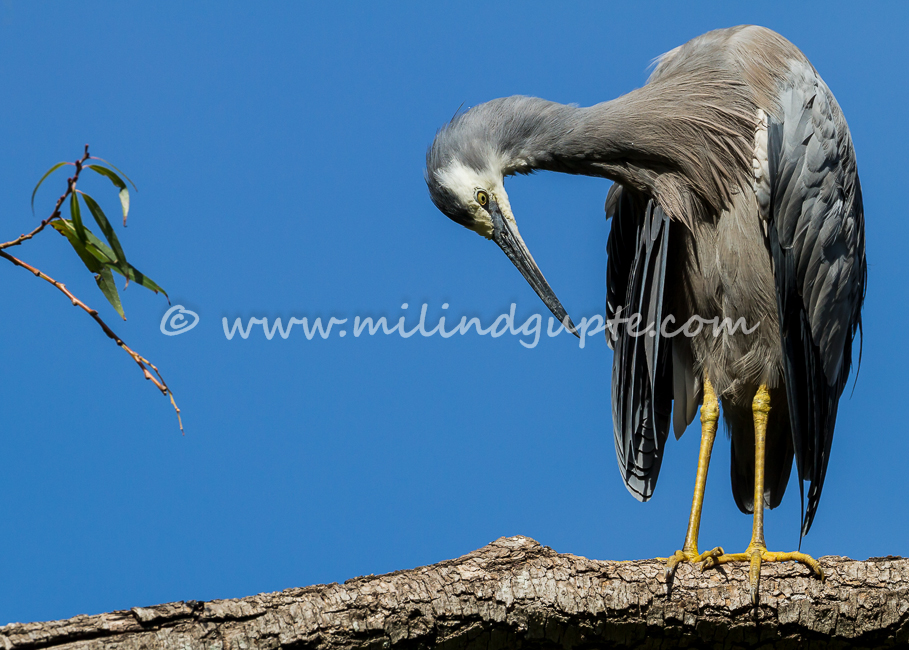
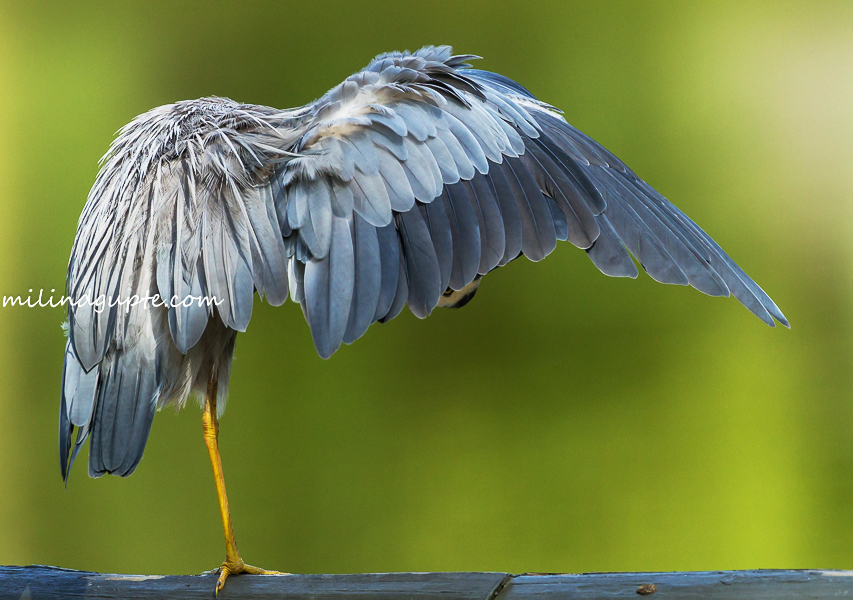
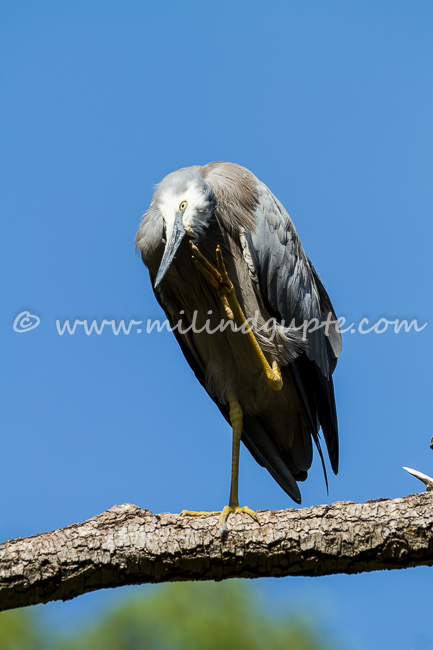
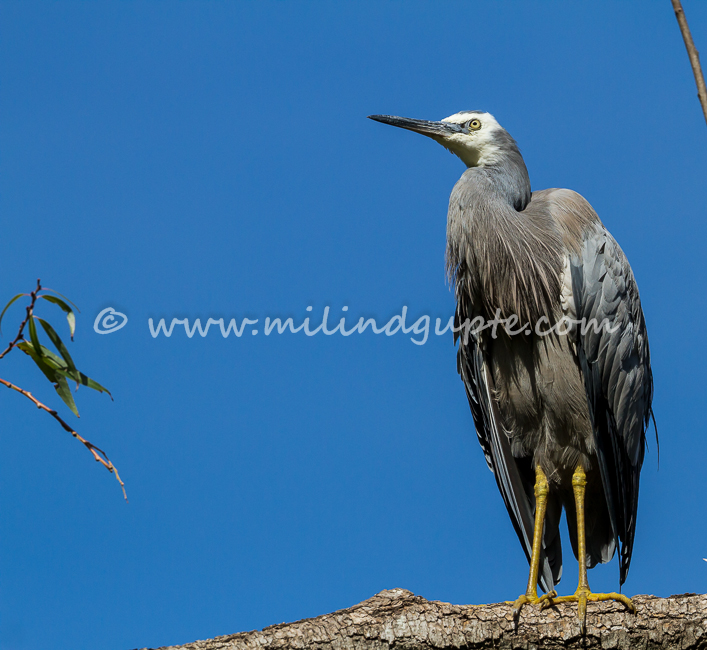
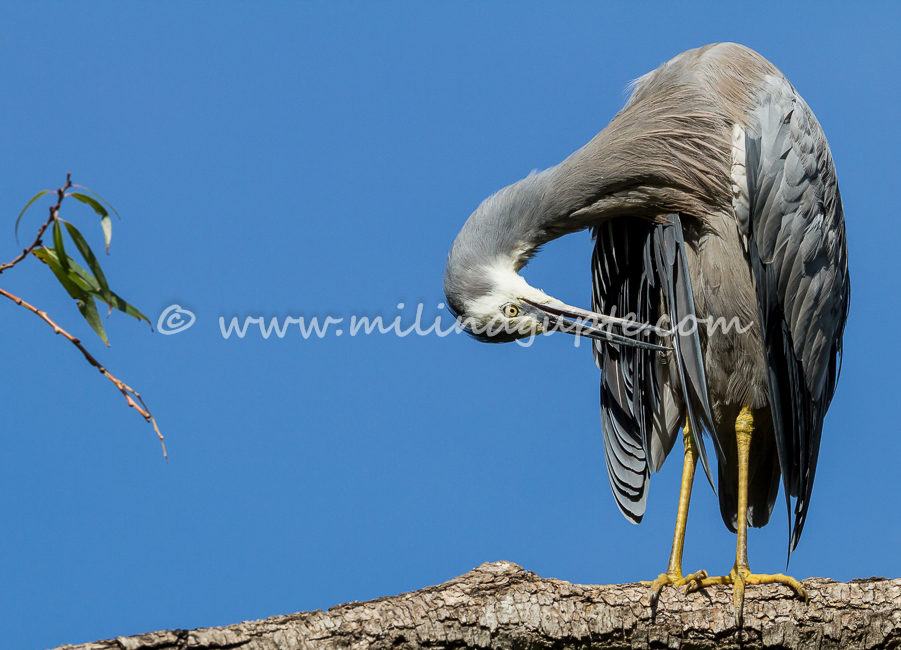
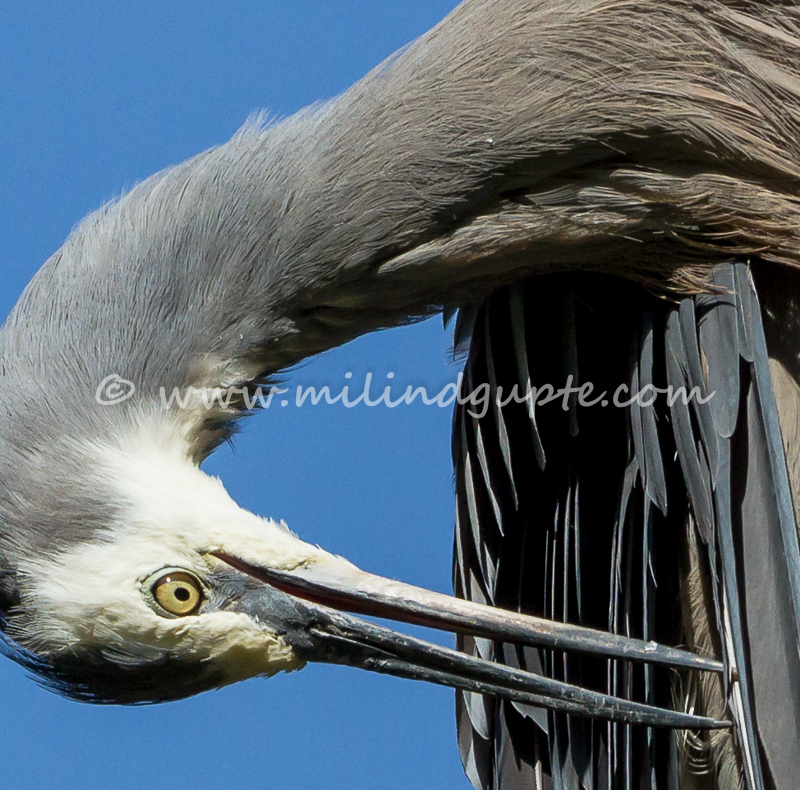
Just to clear all doubts that my 7D was working well with the Canon EF 200-400 F4 IS before I travel overseas on a photographic expedition, I decided to give it another go in the field. Wanting to find out how the combination worked under field conditions and not just testing in the backyard, I headed out on a fine summer morning. I was out with the monopod mounted Canon EF 200-400 F4 IS & 7D. I was lucky to find a white faced heron preening itself on a wooden post and then a branch after a feeding session in the lake below. The heron was engrossed in preening and I was shooting under the cover of some overhanging branches in camo clothing. Being well concealed it took no notice of me and I had the opportunity to try out different settings. I use the back button for focusing. The focusing was quick and I had the image stabiliser on mode 3. I shot the heron with and without the built -in 1.4x TC engaged. The Canon EF 200-400 F4 IS lens with the gripped 7D body balanced well on the monopod with a swivelling head and it was easy to point it upwards and continue shooting even when the heron moved up to the branch. Though I can do it with the monopod head I just loosen the tripod collar on the lens screw and rotate the lens to shoot in portrait mode. The results were sharp with the colours spot on. I am now ready to go and try out the combo on some larger animals. I will be heading overseas in March and towards the end of March I should be able to report along with photos how the Canon EF 200-400 F4 IS & 7D performed in the jungle. Watch this space. I should have a separate gallery dedicated to the results. 
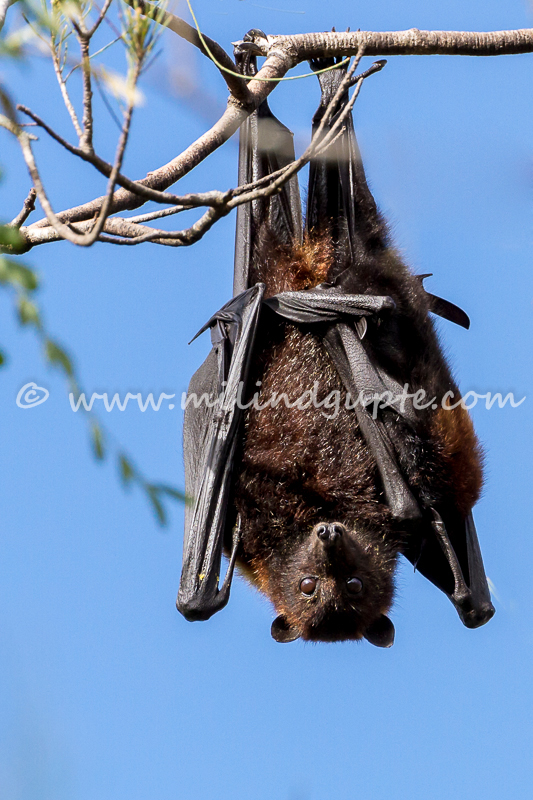
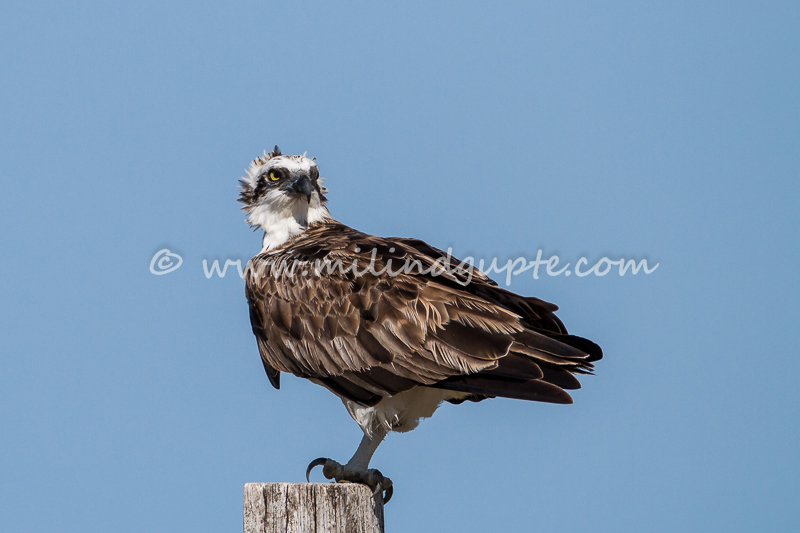
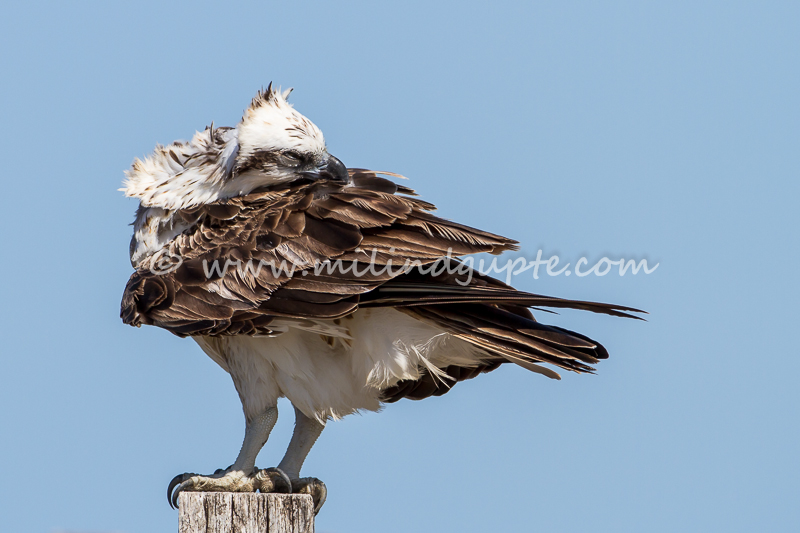
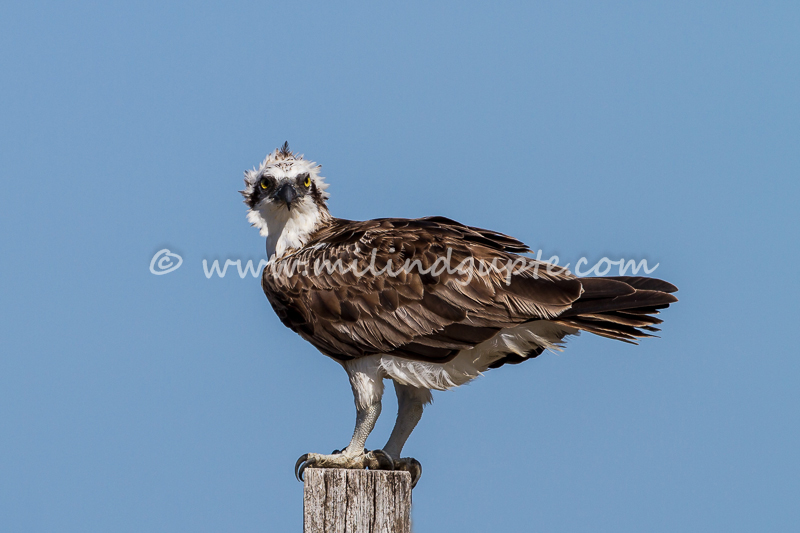
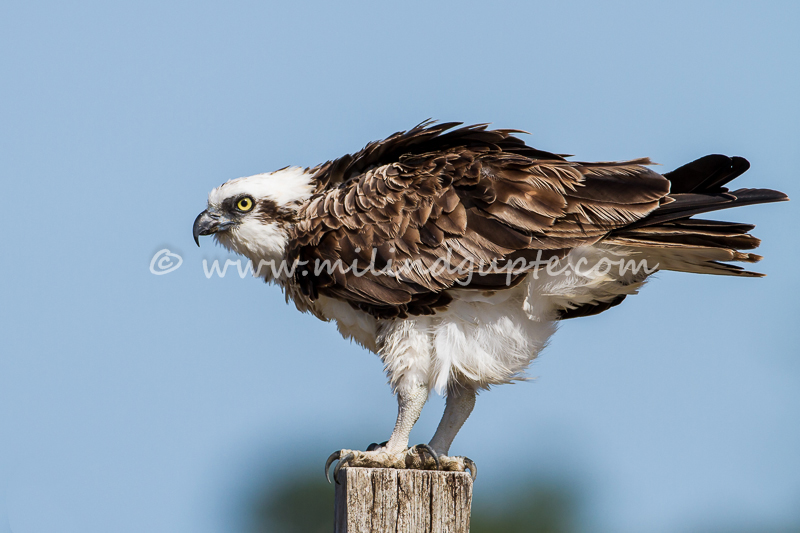
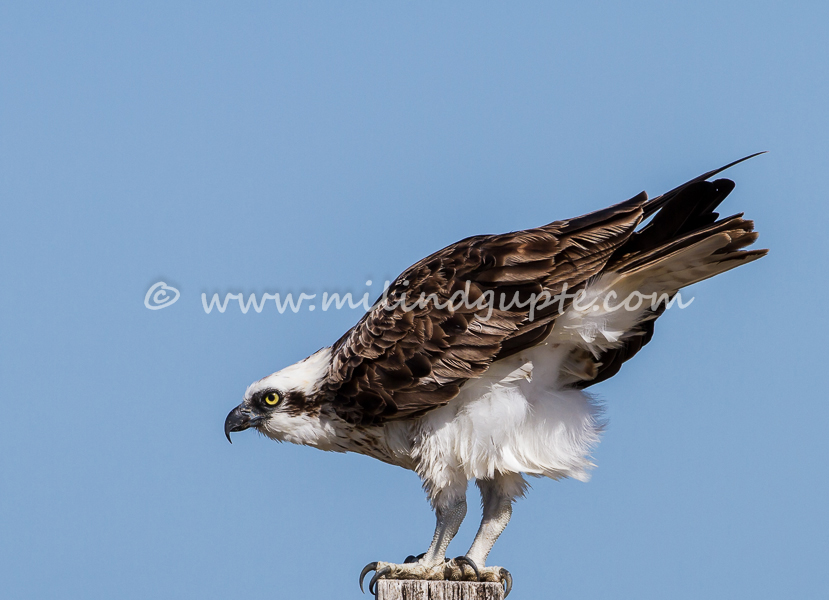
Many people have been asking if the Canon 7D produced soft images when coupled with the new Canon EF 200-400 f4 IS lens. Well, at first it did for me. This was my first “big lens" and though I read the manual and researched long lens technique etc before using it I was getting more soft images than sharp ones. This was not what I am used to. My 300 f4 & the 70-200 L both produce tack sharp images almost every time. Most of the images on my website are with the 70-200L & the 300f4. My Canon EF 200-400 f4 IS lens was producing some amazingly sharp images but more soft ones. I wondered, like many others, if the New Canon EF 200-400 f4 IS was too much lens for the 7D to drive. Like most people, I was under the impression that if I was getting sharp images with the lesser lenses my images should and could only go one way- super sharp. I just had to slap on the new lens and would immediately start getting images that were way better than I was getting with my old lenses. Research on the internet showed that people have used lenses like the 500 f4 with a 50D etc..Had I not spent $$$ on this new state of the art lens? So why all my images were not super sharp? Now was the time to sit back and take stock of the situation. Most of the pros use it with the 1DX, but then it is a FF camera and I am in love with the APSC body. [ Even though I am waiting for the 7D mk ii or whatever it will be called & I was not going to invest in a 1D] Realisation dawned on me that by just attaching the Canon EF 200-400 f4 IS to the 7D body was not going to get me the best results. The 7D is a very capable camera. There was no reason why the 7D should not be able to get sharp images with the Canon 200-400 f4 IS lens. I came to the conclusion that it must be operator error. Effort was required on my part. My observation is that any handling / holding error made while using the Canon EF 200-400 f4 IS is going to be magnified by this lens. You do it right and you will get the results. Make a mistake and you end up with soft images So last weekend I got the gear together to prove to myself that the 7D & Canon EF 200-400 f4 IS combo was not be be blamed for poor images. The weather was not ideal. It was dark & cloudy, with a few short fine breaks. I tried it on different subjects including bats & birds. Results are below. If I did everything deliberately and right I ended up with a series of super sharp images and if I shot in a hurry hoping it would be OK the hit rate dropped. People have likened shooting with a long lens to Rifle shooting & I agree. These days I don’t shoot in the high speed burst mode [ only use it for action] and shoot slowly and deliberately, pay attention to my stance [ I use a monopod], breathing, focusing & shutter release. Now I am getting more tack sharp shots than before and ratio of the sharp ones to the soft ones is getting better everytime I go out and shoot. Finally I have arrived at the conclusion - Yes the 7D & Canon EF 200-400 f4 IS will produce tack sharp images provided you do your part. This combination is much more capable than most new users of big lenses including myself. This lens takes some getting used to. Practice with it till you are getting the results you want. 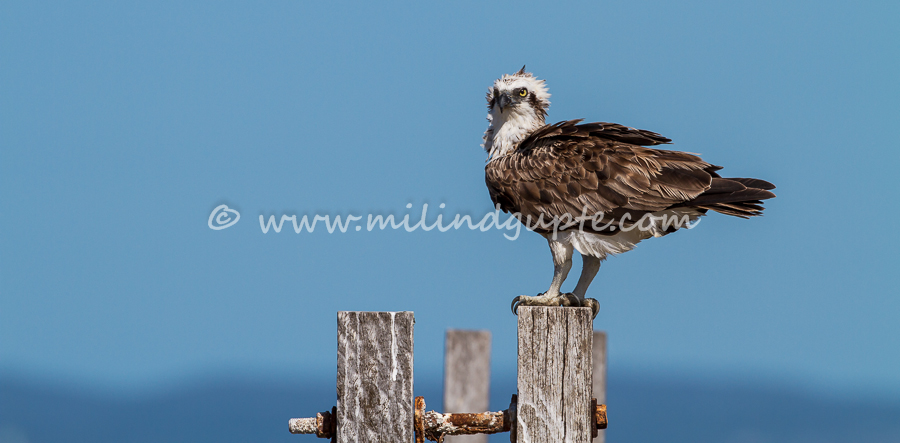 I have been shooting with the Canon EF 200-400 f4 IS with my 7D for a little while now. The results are getting better. One weekend I hastily checked the tide timings for a beach about an hours drive away and left with the Canon EF 200-400 f4 IS and the monopod. This beach is mostly rocky and deserted. This time of the year you get a few wader species at low tide feeding in the shallow rock pools, but you have to get the tide time right. When I reached the beach I was a bit disheartened to see that the tide was at its lowest and the water and the birds were far out. The shallow rock pools were deserted. I could see a few gulls and Godwits in the distance but no Oystercatchers which I was hoping to see and photograph. I had got the light right but in my haste the tide time wrong. Since I was already there, I decided to wait and see if I could find anything worth photographing. While scanning the shoreline with my binoculars, I noticed that the Godwits were in the mud flats away from the rocky portion of the beach. I was reluctant to go with the big Canon EF 200-400 f4 IS as the soft mud is very slippery, standing in one place one slowly starts sinking in and to make matters worse the monopod with the heavy Canon EF 200-400 f4 IS, on top of it, sinks even deeper. I then noticed a big bird resembling a bird of prey close flying close to the ground. It turned out to be an Osprey [Pandion haliaetus] . These birds can be spotted flying over water and are always found near water bodies as their diet is predominantly fish. I wondered what it was doing flying so low over rocky ground. It flew across, swung up and perched on wooden posts some distance away. Watching it through my binoculars, it did not seem to be in a hurry and made itself comfortable. Pulling one leg up and tucking it away, it kept surveying its surroundings standing on one leg. I decided to try my luck with getting few shots of the Osprey.There was no cover between the bird and I. This was the first time I was carrying the Canon EF 200-400 f4 IS over slippery and uneven ground. I slowly made my way at an angle to its perch keeping one eye on it and the other on the ground under my feet. One false step and the Canon EF 200-400 f4 IS would be on the hard rocks along with me. As I got closer, I put the monopod on the ground and hid my face behind the camo covered lens. My dull coloured attire also helped. Every time the Osprey looked the other way I moved a few steps ahead and stopped. The progress was very slow but eventually I was close enough so that the bird was filling half the frame with the TC [tele converter] engaged. I started shooting and only then did I notice the wind. Trying to hold the AF point where I wanted as I was being pushed by strong gusts of wind was a challenge. The big lens hood provided more wind resistance, moving the whole setup. I tried edging closer while keeping myself hidden behind the lens but didn’t get too far as I did not want to disturb the bird. So far it had been cooperating nicely. I kept a close watch on the Osprey’s body language. It was very relaxed and once in a while it would bring down its other leg and then up again. It was at an angle to me [not exactly parallel to the camera] and every time it looked my way, I took a shot. It started preening itself with the wind ruffling its feathers. All the time while preening it had it eyes always shut [as you can see from the photo below] and looked fresh and alert at the end of it. With it’s rest over it flew away with it’s back to me. 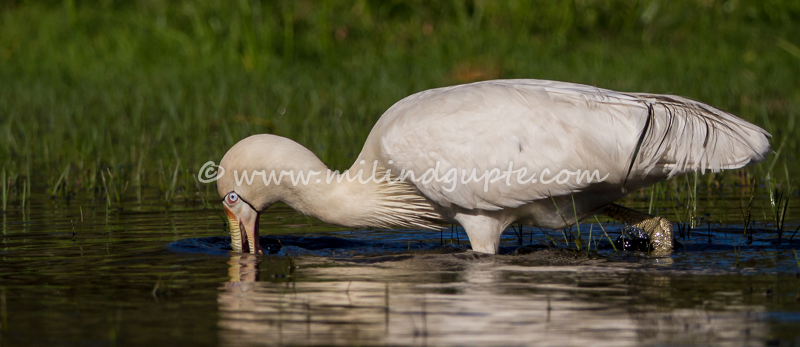
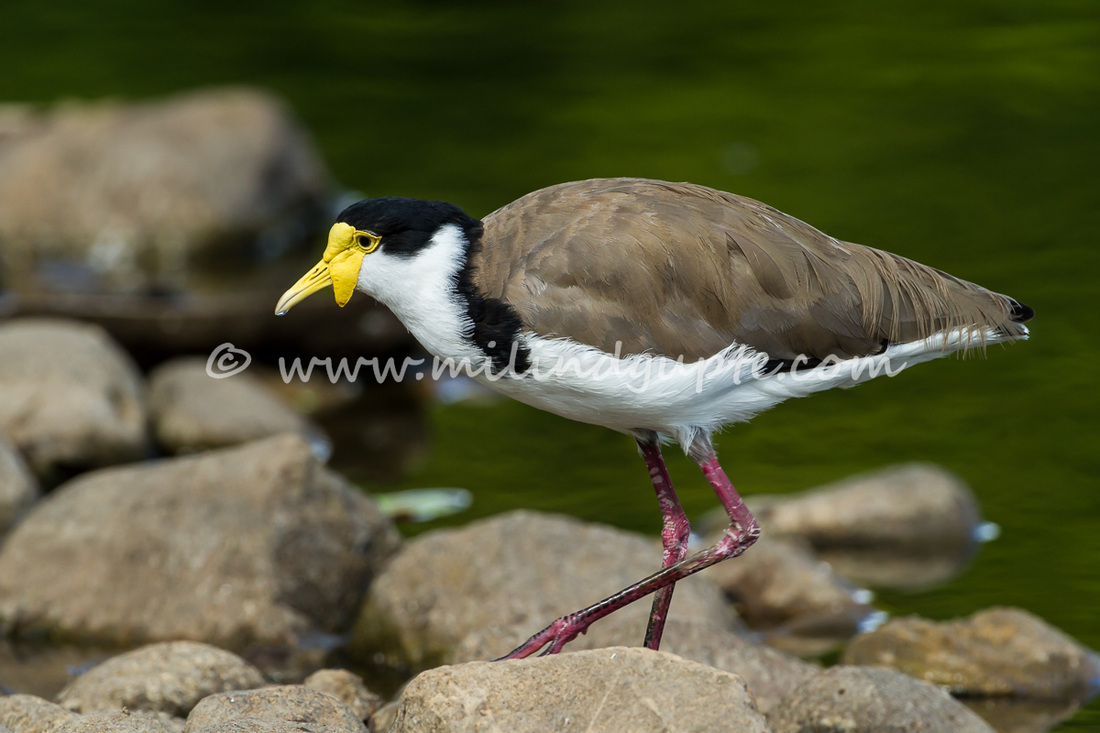
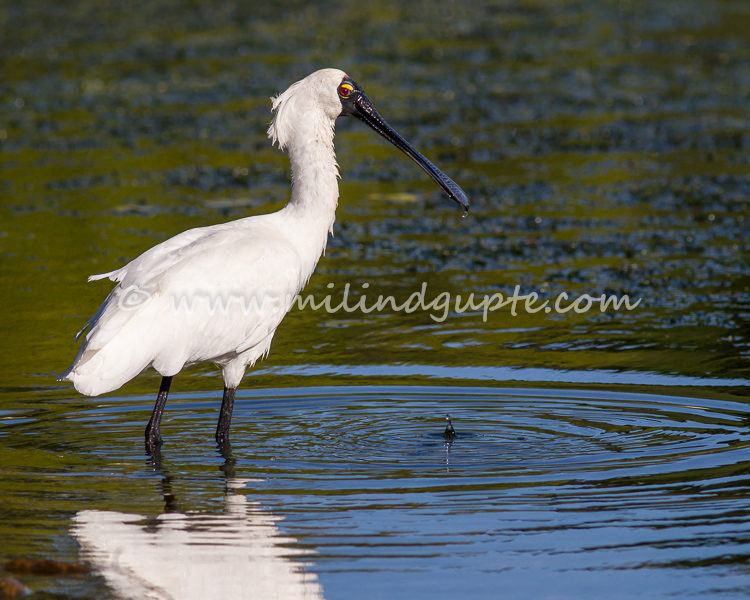
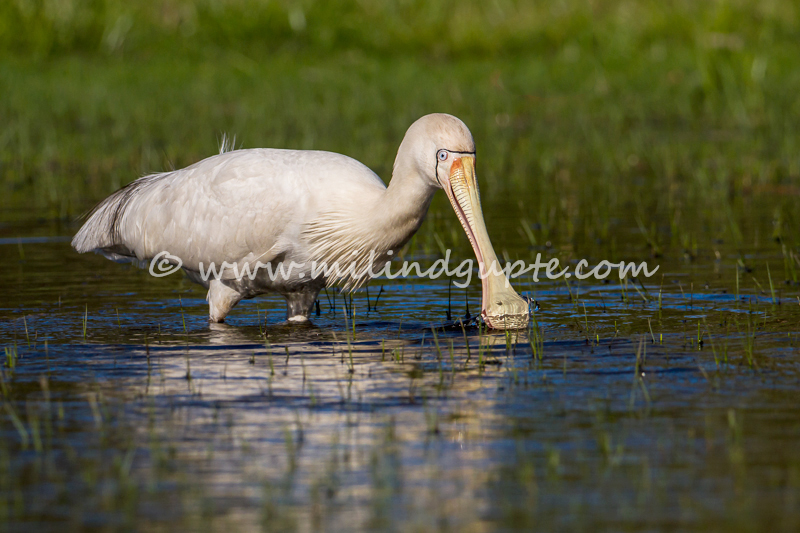
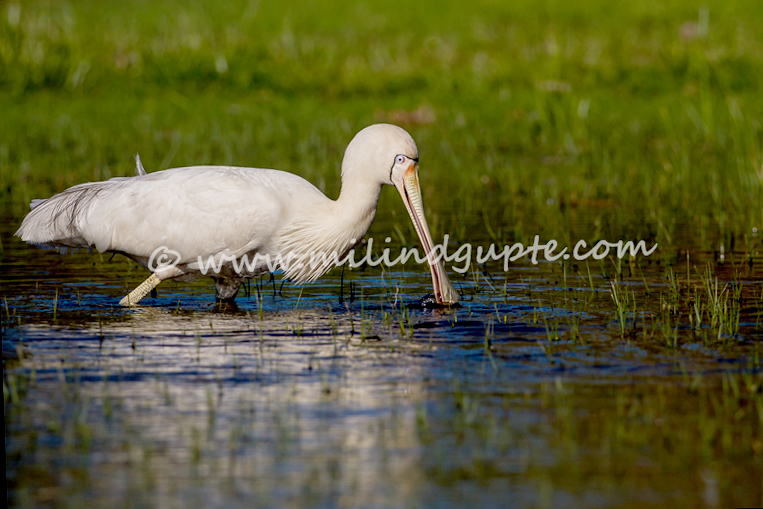
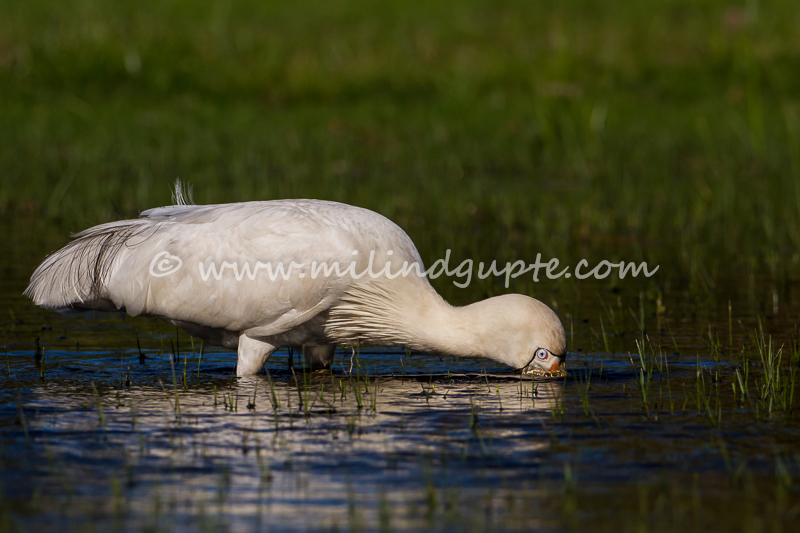
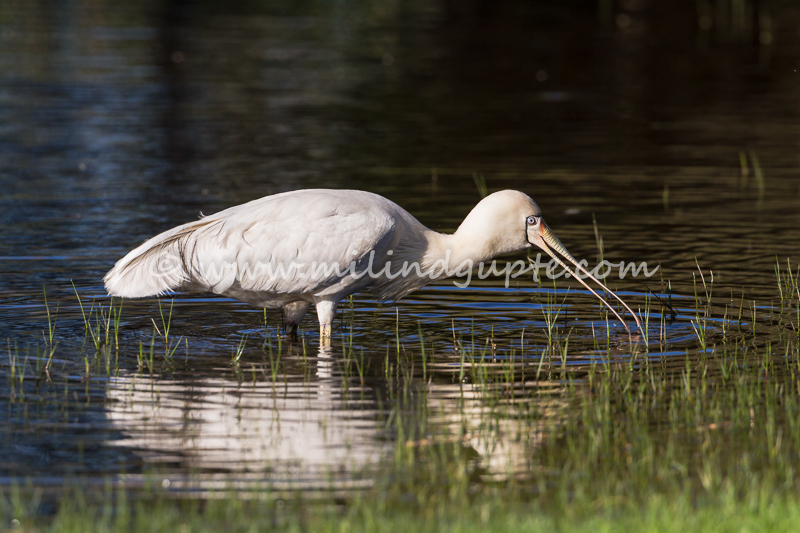
It's hardly rocket science, but the best way to photograph bird & wildlife is to be out there in the nature where the birds and animals are. Sitting at home admiring your gear does not get you the shots you are after. To put preaching into practice, whenever I have some spare time on my hands, nothing else planned and the weather is not inclement I grab my gear and head out even, if it is to something as non exotic as one of the local water bodies or reserves. You will be surprised at the opportunities that present themselves by just being out there. I have been pleasantly surprised many times and that was just due to me getting off my backside and being out there. One such afternoon I headed out to a water body close by to see what was around. I made myself comfortable on the grass with the gear handy, just soaking in the atmosphere. It was warm & tranquil under the clear blue sky. A few sacred ibises were flying overhead, a pelican was soaring high on the thermals. Dusky swamp hens were going about their business along the waters edge & a lone pied cormorant was drying it’s out-stretched wings on a dead tree in the distance. Lorikeets and other birds could be heard amongst the trees. I was happy just lazing there and watching the world go by. There was just not enough inducement for me to grab the gear and start shooting. I must have been sitting there for the better part of an hour when out of the corner of my eye I saw a white bird flying low heading in my direction. Engrossed in watching the antics of the swamp hens and masked lapwings I did not pay much attention thinking it was just another ibis. The bird glided down and landed in the shallow water in front of me. It wasn't just another ibis but a yellow billed spoonbill that I was looking at. Now here was an opportunity that had presented itself and now it was up to me to make the most of it. It glanced around and immediately commenced feeding in the shallows sweeping its bill from side to side in true spoonbill fashion. The Yellow billed Spoonbill [Platalea flavipes] is usually more solitary than the other species Royal Spoonbill found in Australia. It is found throughout the country except the dry deserts. It gets its name from the colour of its spoon shaped bill which is yellow whereas the Royal Spoonbills is black [Please see photos below & also birds gallery for comparison - Royal spoonbill not shot with Canon 200-400 f4]. Its legs are also yellow. In breeding plumage, there is a thin black line separating its face from the white head, it has black lacy feathers on its back and long feather hackles grow on its chest. The body is dirty white or creamy in colour and not white like the Royal Spoonbills. I watched for a while and once it had settled into feeding, I grabbed the Canon 200-400 f4 & 7D which was on the picnic blanket by my side and mounted it on the monopod. I like to photograph birds at their eye level so there was no need to extend the collapsed monopod, the height was just right for shooting. Having checked the settings, I cautiously butt crawled at an angle towards the spoonbill who was fully engrossed in feeding. As I edged closer to the bird and the water, the grass grew thicker & I could feel water slowly seeping through my trouser bottom. The grass closer to the edge clearly held a lot of water. Through the Canon 200-400 f4 I could clearly make out the feather detail of the bird, the black plumes towards it’s tail & the pale bluish eyes and also the markings on its beak. The spoonbill would go from left to right probing the bottom and coming up from time to time with a beak full and then it would walk back from right to left again repeating the process. With a quick glance at the histogram & keeping a lookout for blinkies I kept shooting. I am now getting used to the Canon 200-400 f4 now and the results are getting better. Cannot fault the colours, IQ or the sharpness. It snaps into focus [It would surely focus better with a body having the latest autofocus module]. The spoonbill kept feeding for a while before deciding that there was a better feeding spot on the other side of the water body. I had got my shots, the spoonbill had made my day. Putting the theory, of getting out where the birds were likely to be, into practice had worked as it had many times before. My pant seat was now thoroughly wet. A wet bottom was but a small price to pay for lovely photos of the spoonbill. 
I was travelling interstate to Perth for a few days and decided to take the Canon 200-400 f4 along. My contact there had informed that I would get some opportunity to try it out. This was good as I also wanted to see how I would be able to transport it on the plane. The was going to be a 4 ½ hours flight. The lens case I had bought for my Canon 200- 400 f4 lens was airline carry-on compatible. Only thing I did was removed the harness [ which allowed me to use it as a back pack] & the waist belt. Now it looked very sleek & compact. The Canon 200-400 f4 lens fit inside snugly with the 7D body. I put additional air bags and my fleece top to provide further cushioning and avoid any movement. The harness & the belt went into my checked baggage. The carry case with Canon 200-400 f4 with gripped 7D body weighed under the allowed 7 kgs cabin baggage limit. It comes with carry handles and is well balanced. |
Archives
October 2017
Categories
All
|
 RSS Feed
